Category

AI & Automation

34 insights · page 1 of 5

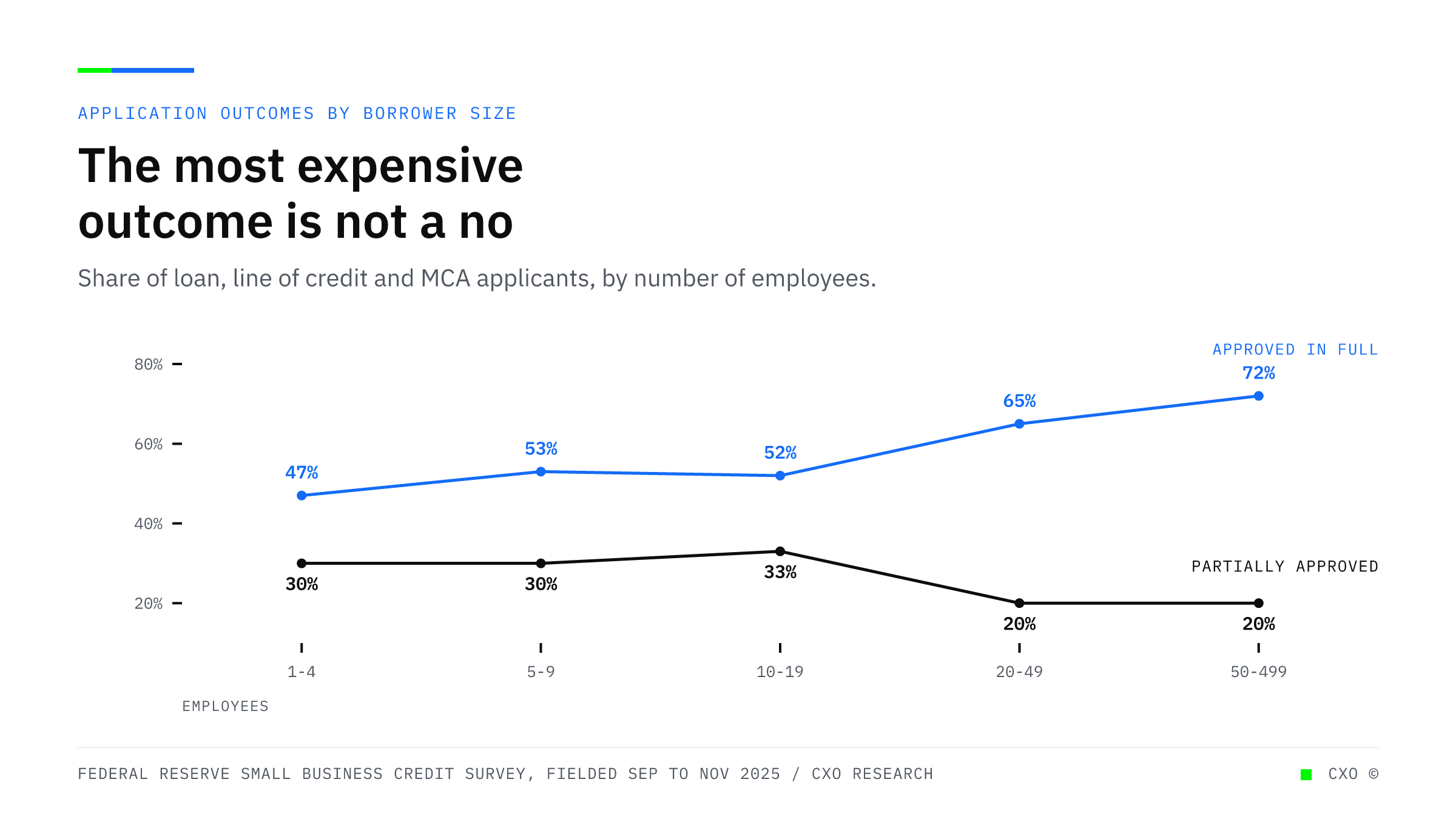
Two lines across five employment size bands: applications approved in full rise from 47 percent at firms with 1 to 4 employees to 72 percent at 50 to 499, while partial approvals fall from 30 percent to 20 percent.

The Most Expensive Outcome in Your Book Is Not a Decline. It Is a Partial Approval.

Approval rate counts a partial as a win. It is the one outcome that consumes the entire cost of a yes and books a fraction of the revenue, and it concentrates in exactly the size band the non-bank channel serves.
View Insight
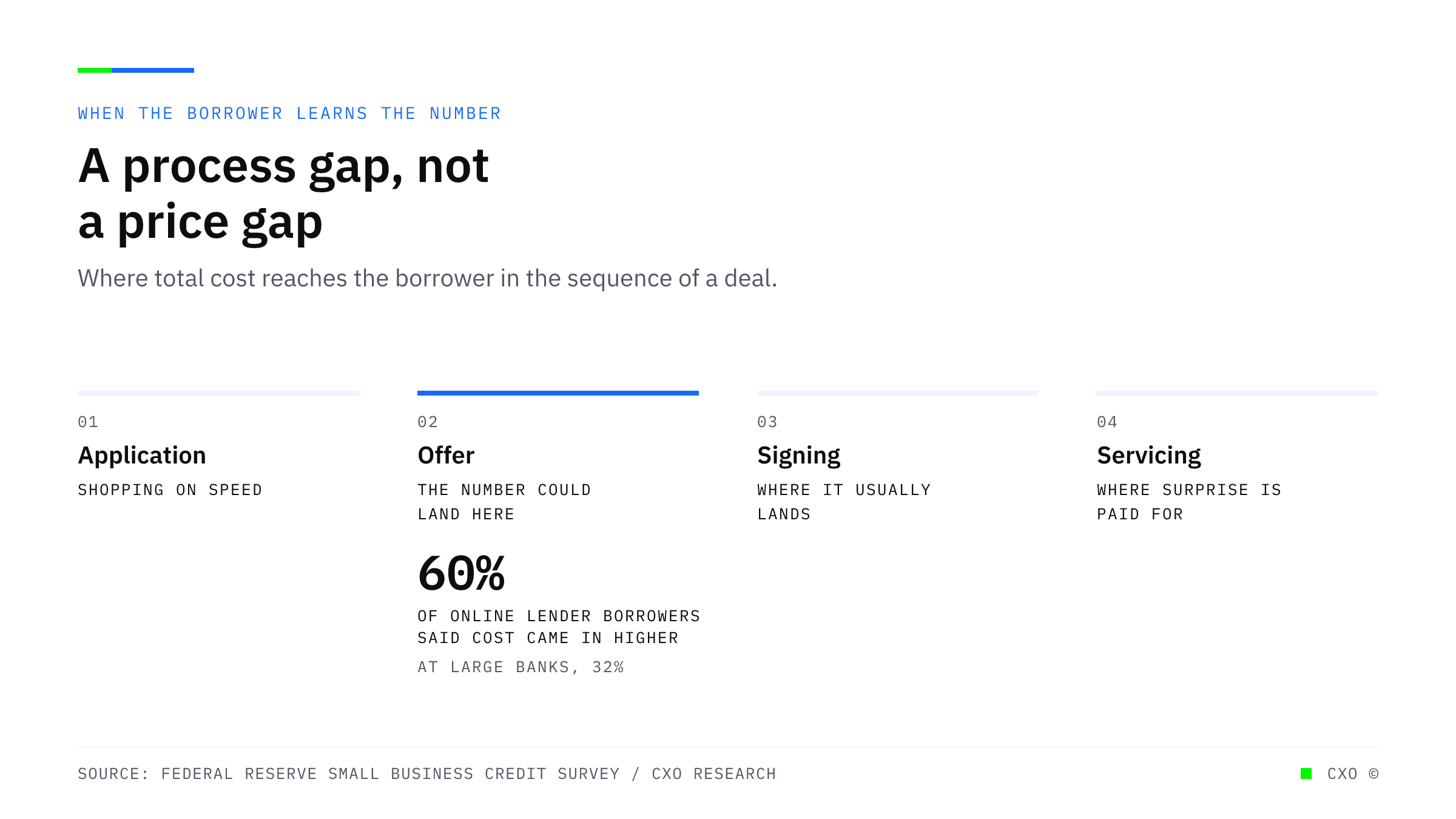
A labelled diagram of four stages in a borrower's path, marking the offer as the point where the total cost could be disclosed, against 60 percent of online lender borrowers reporting costs higher than expected and 32 percent at large banks.

Sixty Percent of Your Borrowers Were Surprised by the Cost. At Banks It Is Thirty-Two.

The same borrowers, the same market, a 28 point gap in whether the cost landed as expected. That difference is produced by process, which means it can be closed without touching price.
View Insight
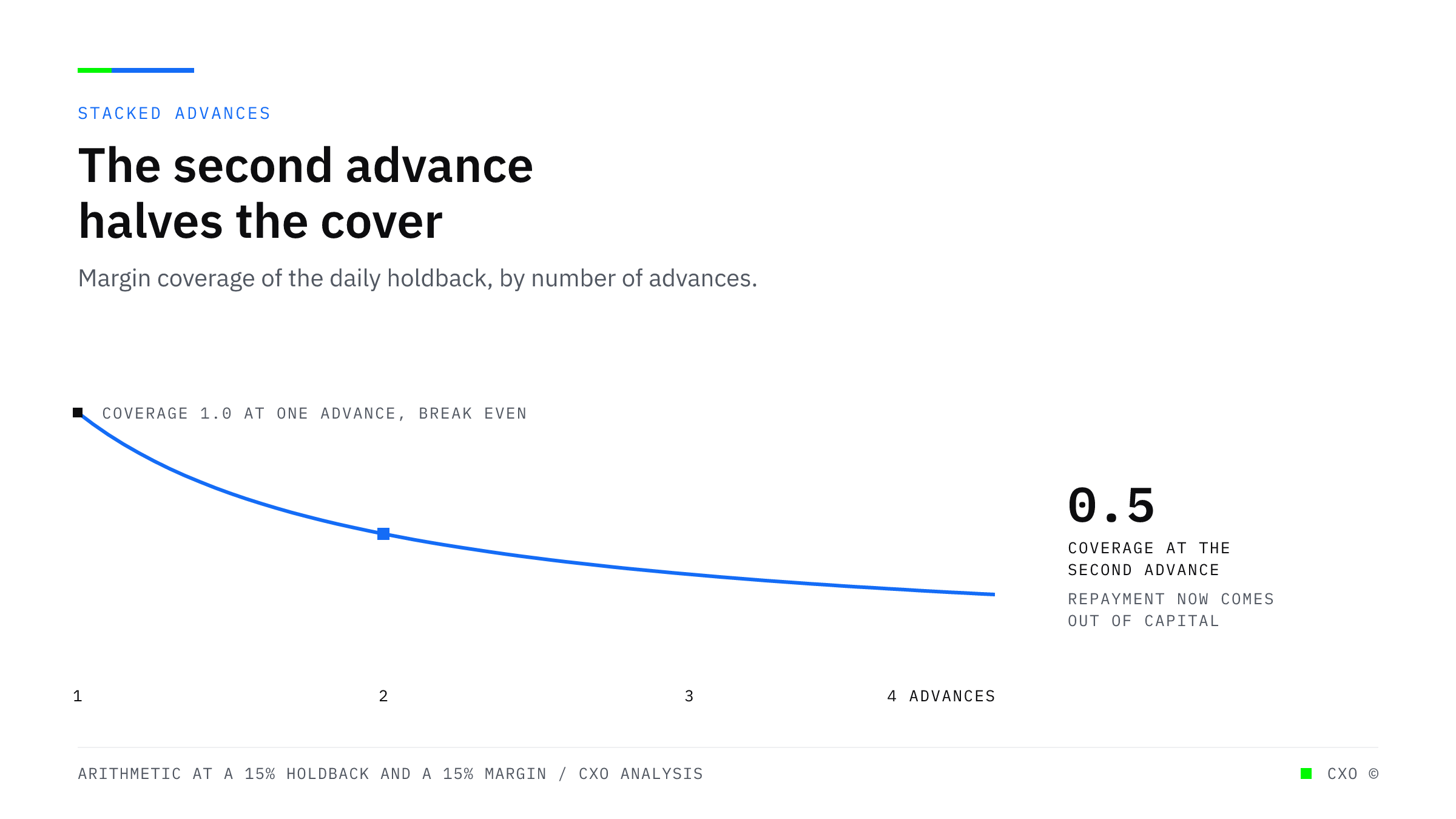
A falling curve showing how a merchant's margin coverage of their daily holdback collapses as advances stack, passing below the break-even threshold at the second advance.

Every Lender in a Stacked Position Underwrote It Correctly

One advance takes 10 to 20 percent of daily receipts. Two or more take 30 to 40. Each funder assessed the file in front of it, and the position that kills the merchant exists only across files.
View Insight
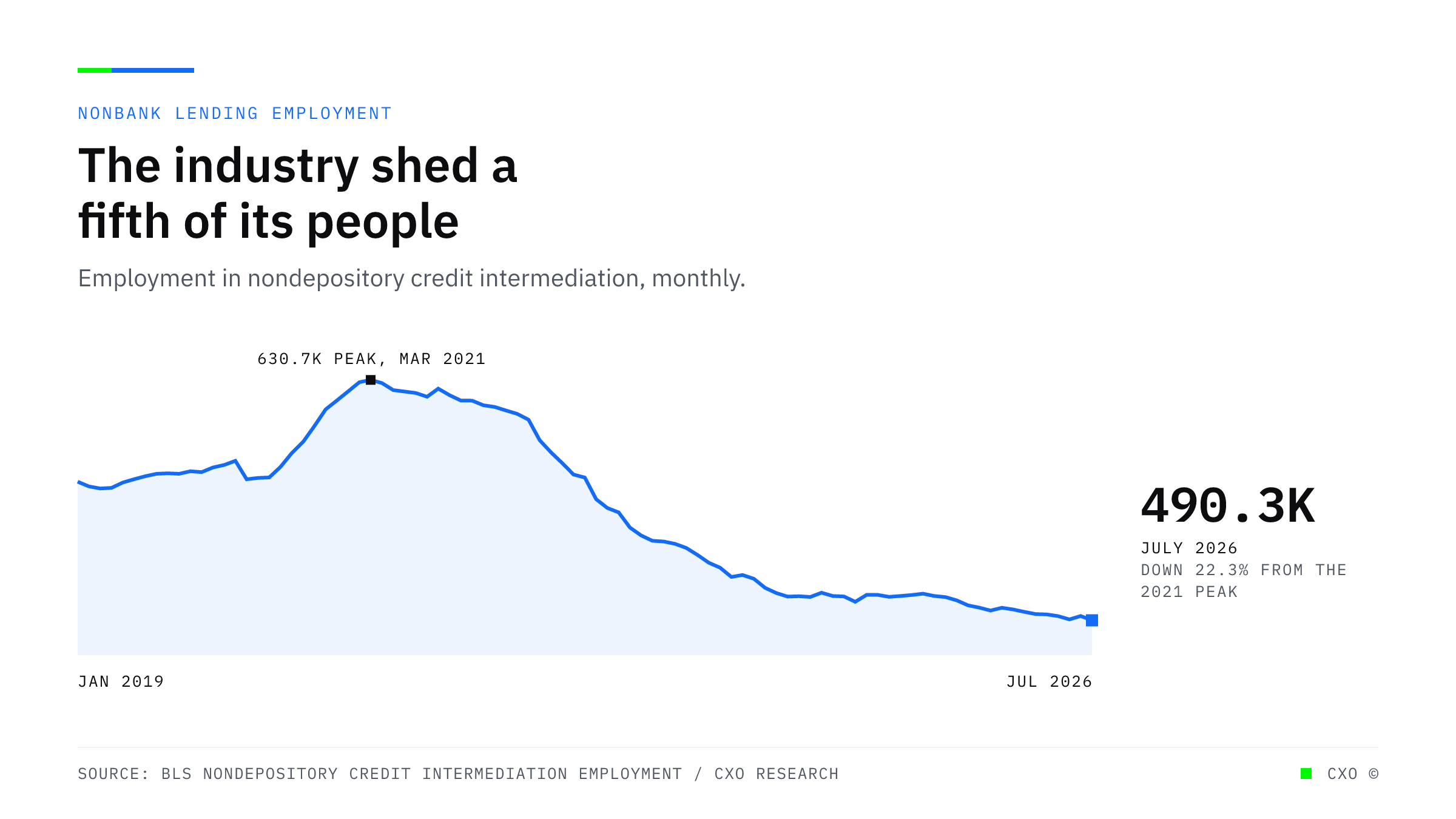
A curve of monthly employment in nondepository credit intermediation, peaking at 630,700 in March 2021 and falling steadily to 490,300 in July 2026, a decline of 22.3 percent.

The Industry Has 140,000 Fewer People Than in 2021 and a Larger Share of the Applications

Employment in nondepository credit intermediation has fallen 22.3 percent from its 2021 peak and is still declining, while the share of small business applicants going to online lenders rose to 29 percent.
View Insight
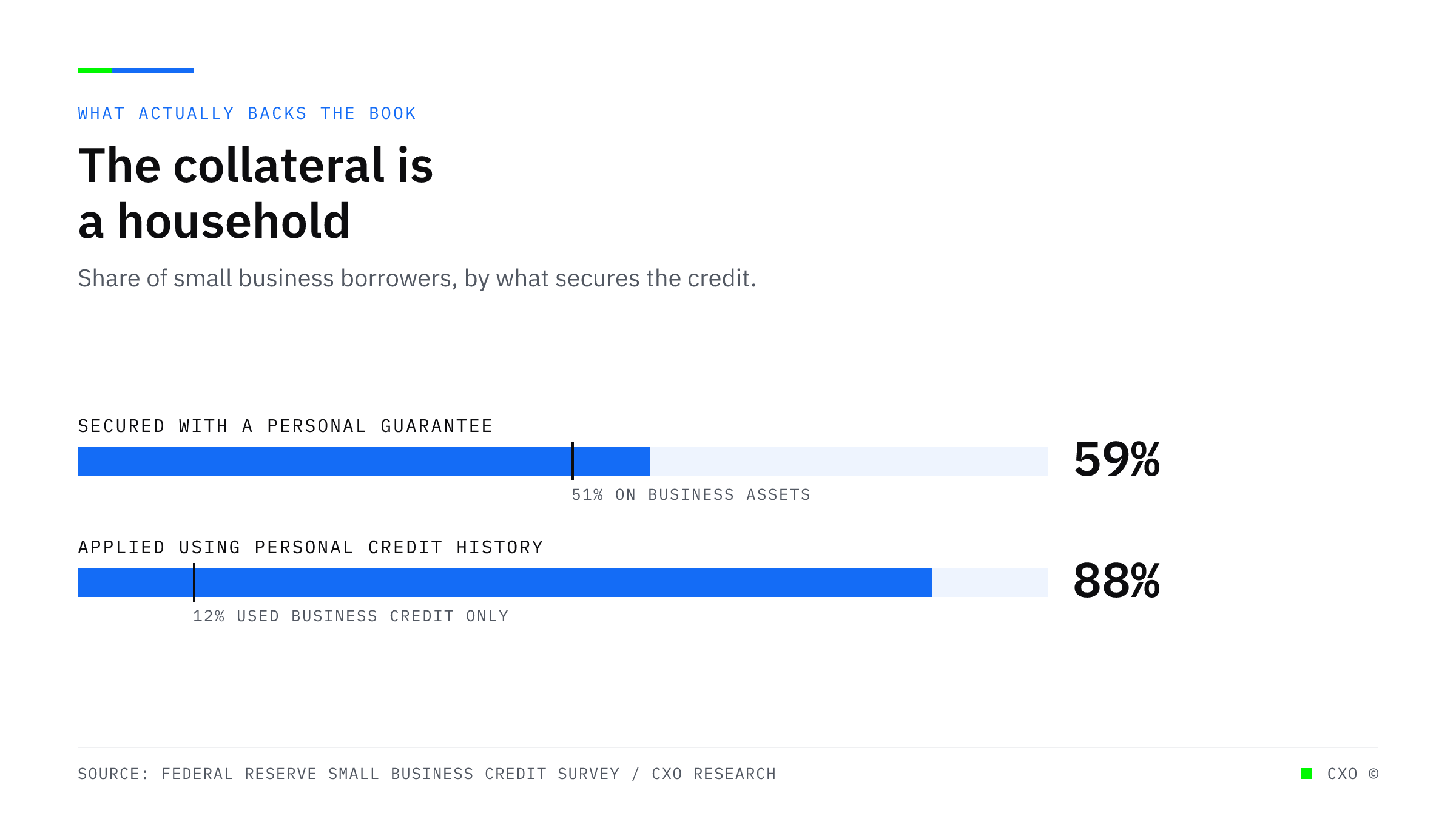
Two bullet bars showing that 59 percent of small business debt holders secured their debt with a personal guarantee against 51 percent using business assets, and that 88 percent of owners applied using personal credit history against 12 percent who used business credit only.

Fifty-Nine Percent of Small Business Debt Is Secured on a Household You Underwrite Once

Most small business debt is backed by a personal guarantee, which makes a household balance sheet the collateral. Merchants get monitored daily. Guarantors get looked at once, at origination.
View Insight
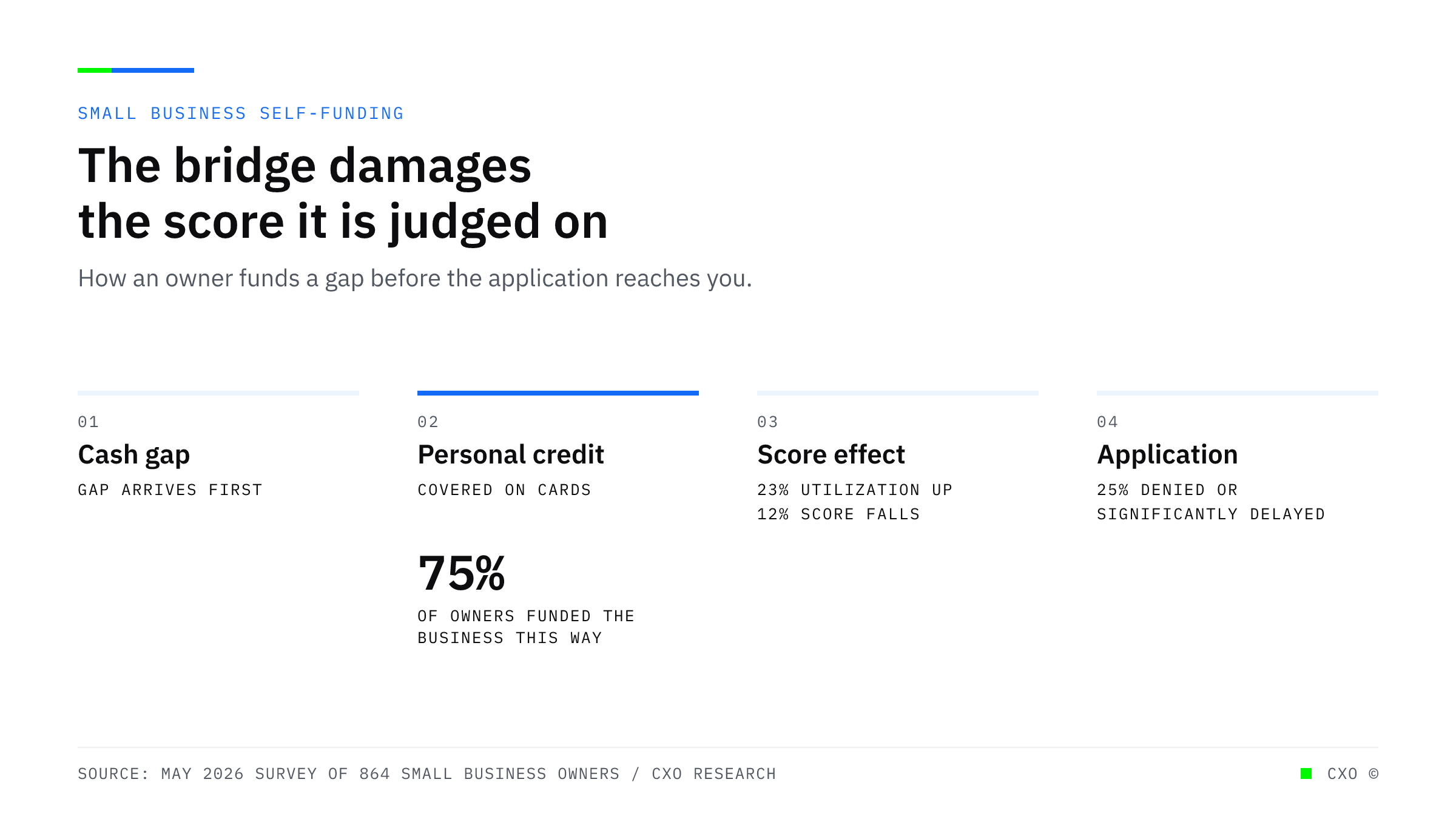
A labelled diagram of how a small business owner self-funds before applying: a cash gap appears, personal credit covers it for 75 percent of owners, utilization rises for 23 percent and personal credit scores fall for 12 percent, and 25 percent are then denied or significantly delayed on the business application that follows.

Three in Four Applicants Already Borrowed Before They Reached You. It Was on Personal Credit.

Revolving credit is growing at nearly twice the pace of everything else, and 75 percent of small business owners funded the business on personal credit in the past year, up from 49 percent in 2024.
View Insight
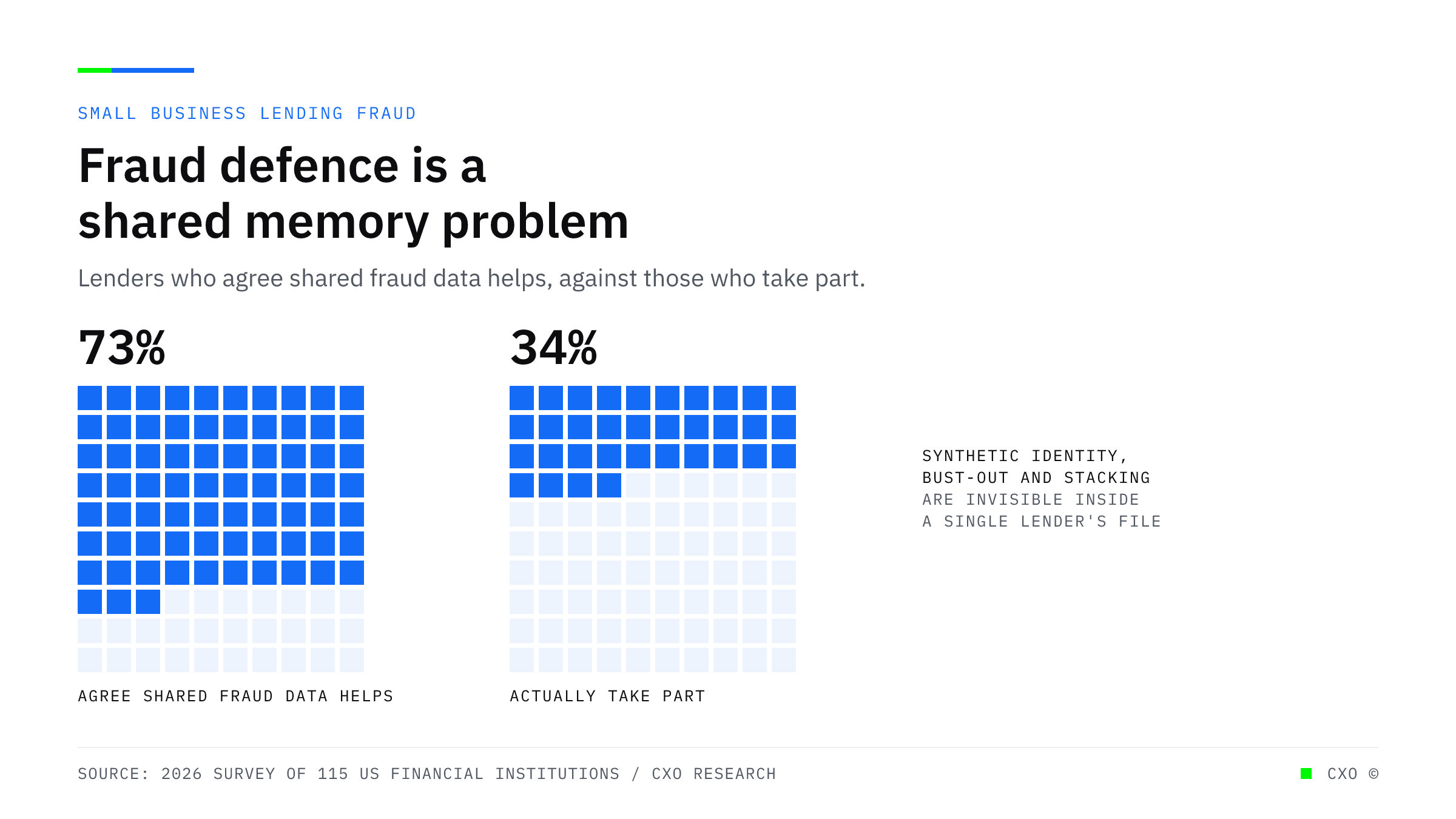
Two grids of 100 squares comparing lenders who agree that shared industry fraud data helps, at 73 percent, against the 34 percent who actually take part in it.

The Fraud Growing Fastest Is the Kind You Cannot See in Your Own File

Synthetic identity, bust-out and application stacking are the three fastest growing fraud types, and none of them are visible in one lender's own file. The defense is recall, not detection.
View Insight
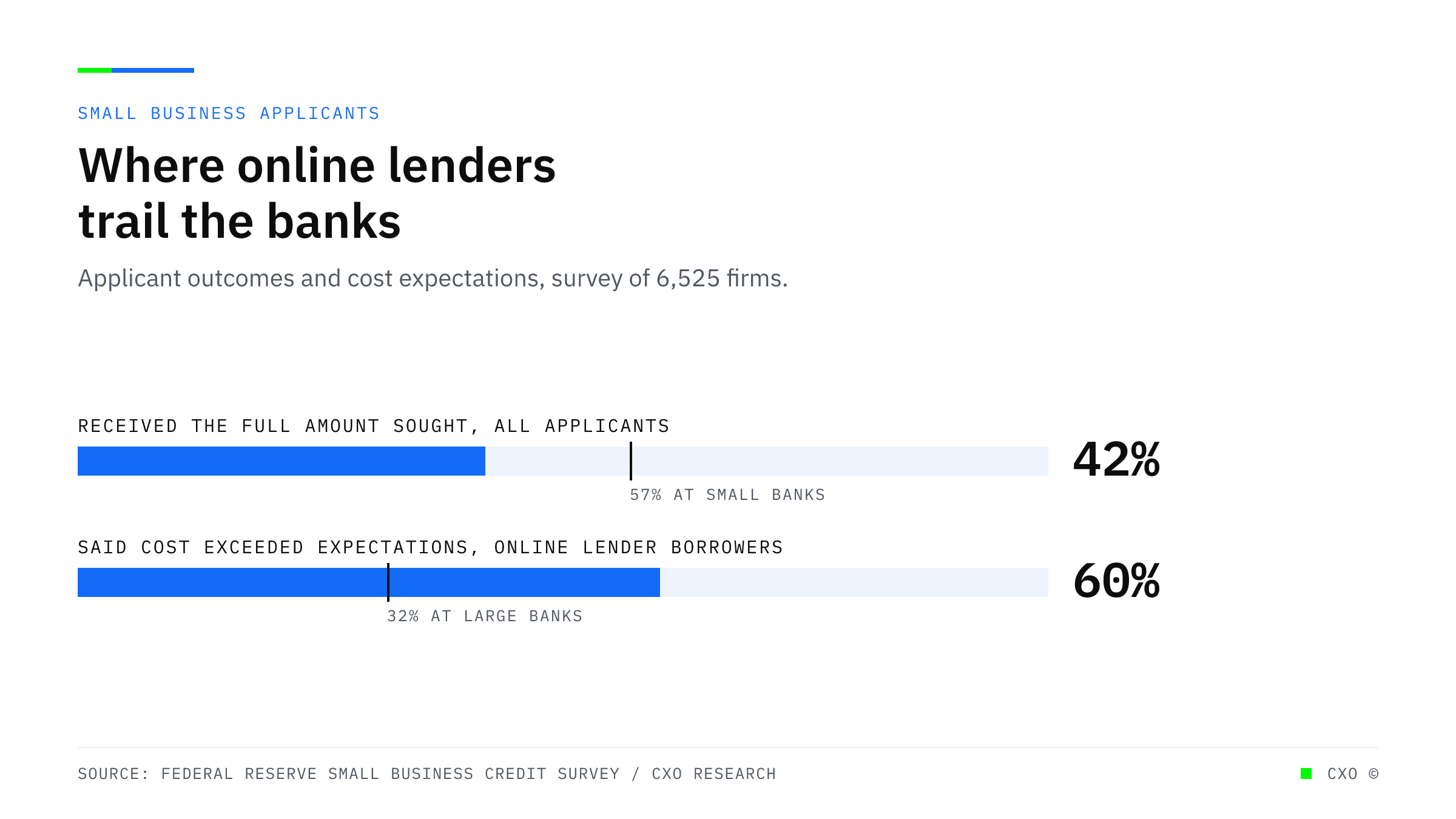
Two bullet bars comparing small business applicant outcomes against bank benchmarks: 42 percent received the full amount sought against 57 percent at small banks, and 60 percent of online lender borrowers said costs exceeded expectations against 32 percent at large banks.

Thirty-Six Percent of Applicants Got Part of What They Asked For. That Is Your Biggest Untouched Book.

Across small business applicants, 42 percent received the full amount sought and 36 percent received some or most. The partially funded group carries an unmet need, a completed file, and no owner.
View Insight

Start with the process that costs you most.

A conversation first. A structured assessment when it earns one. Or see what a discovery finds before you book anything.

Book a discovery call See what a discovery finds