Category

AI & Automation

34 insights · page 2 of 5

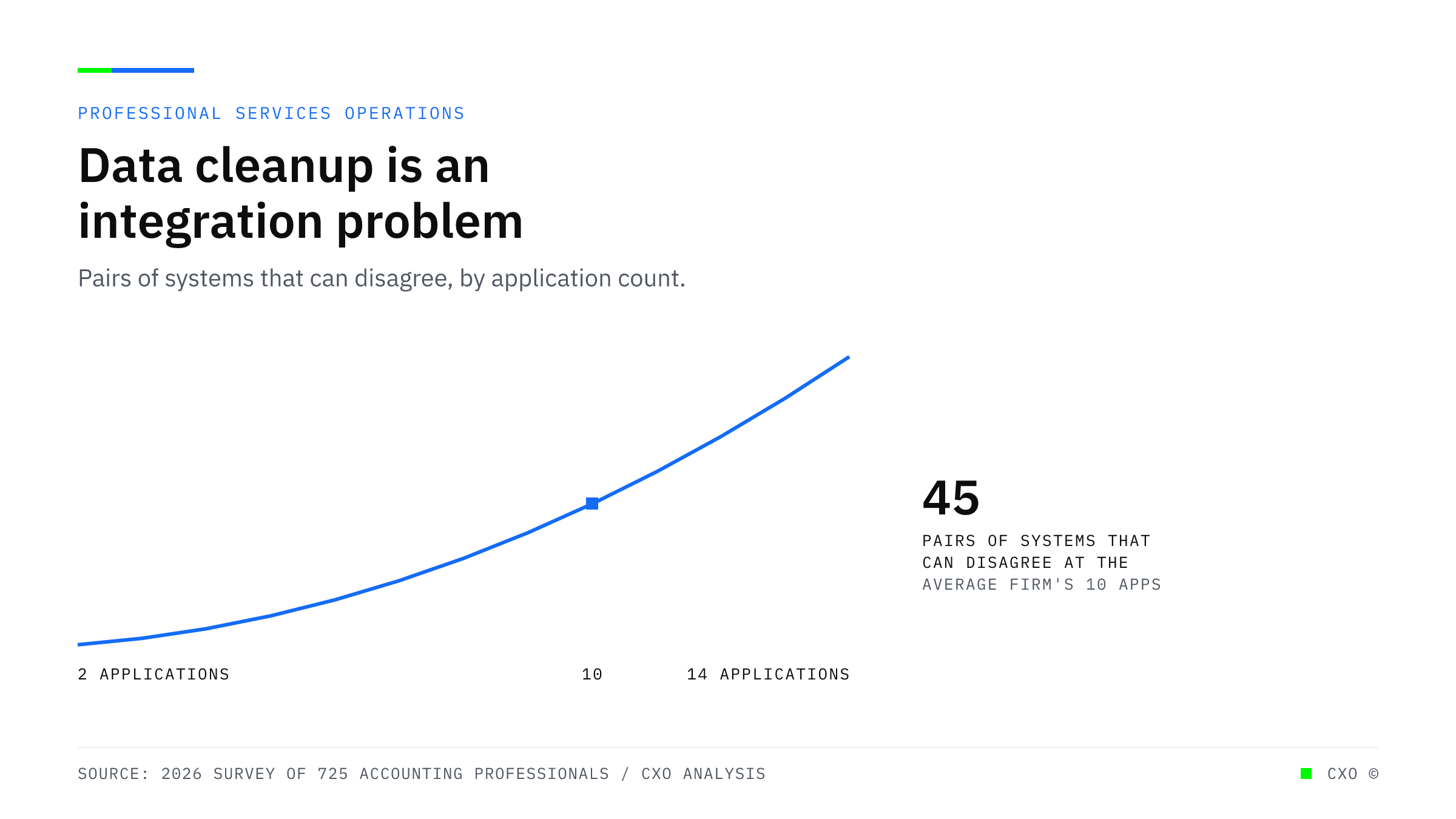
A rising curve showing that the number of system pairs that can disagree grows faster than the number of applications a firm runs, with the average firm's ten applications marked at 45 pairs.

The Top Barrier to Advisory Work Is Data Cleanup. That Is an Integration Problem.

Thirty percent of accounting professionals name manual data cleanup as the top barrier to advisory work, ahead of staffing. The average firm runs ten applications and loses five hours a week to re-entry.
View Insight
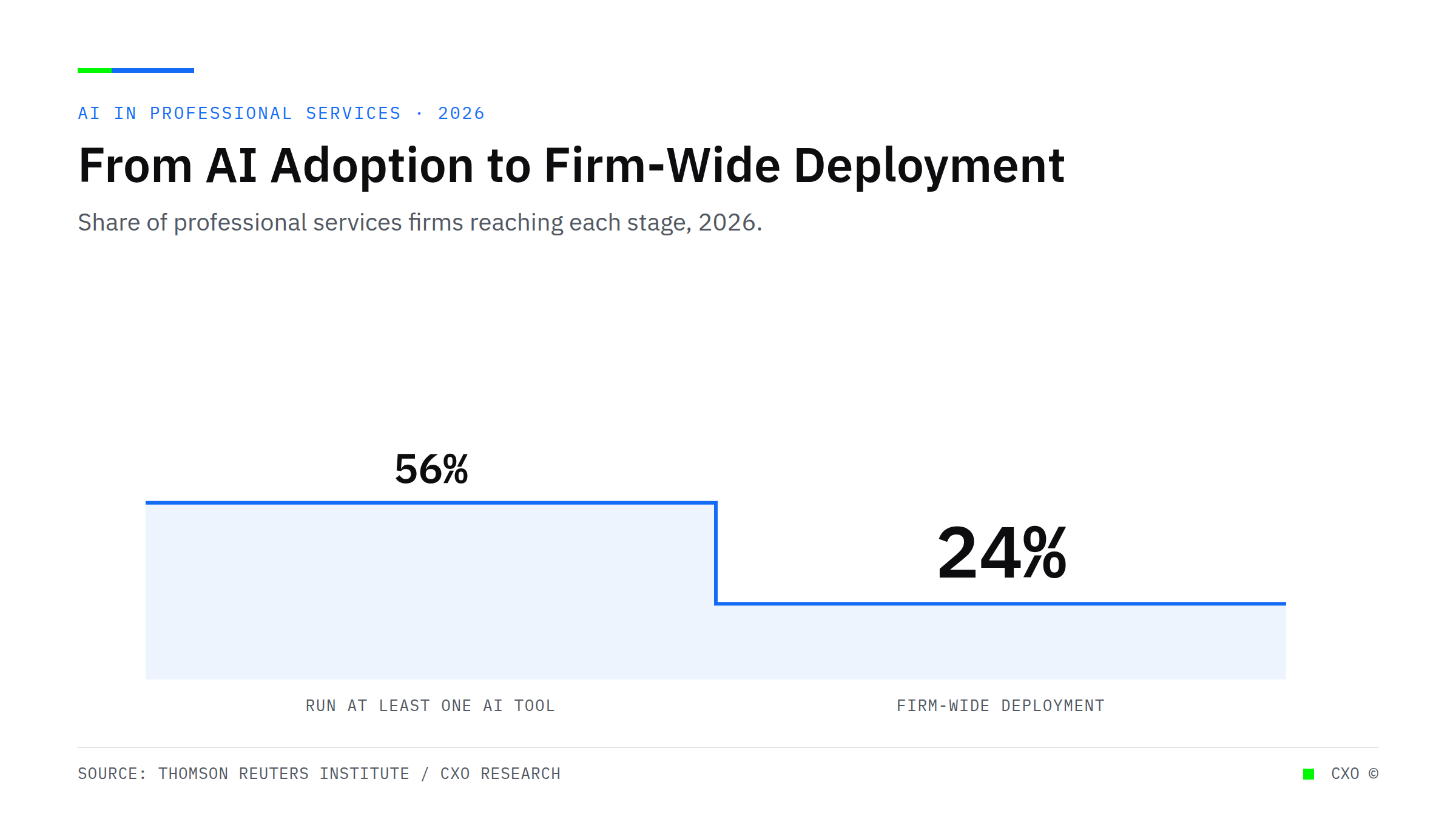
Stepped area chart showing professional services AI adoption at 56% of firms stepping down to 24% at firm-wide deployment, illustrating the redesign gap.

The Firms Getting the Most From AI Rebuilt the Workflow, Then Automated It

Professional services leads on AI adoption, but only about a quarter deploy firm-wide. The difference is workflow redesign, not tools. What the leading quartile did differently.
View Insight
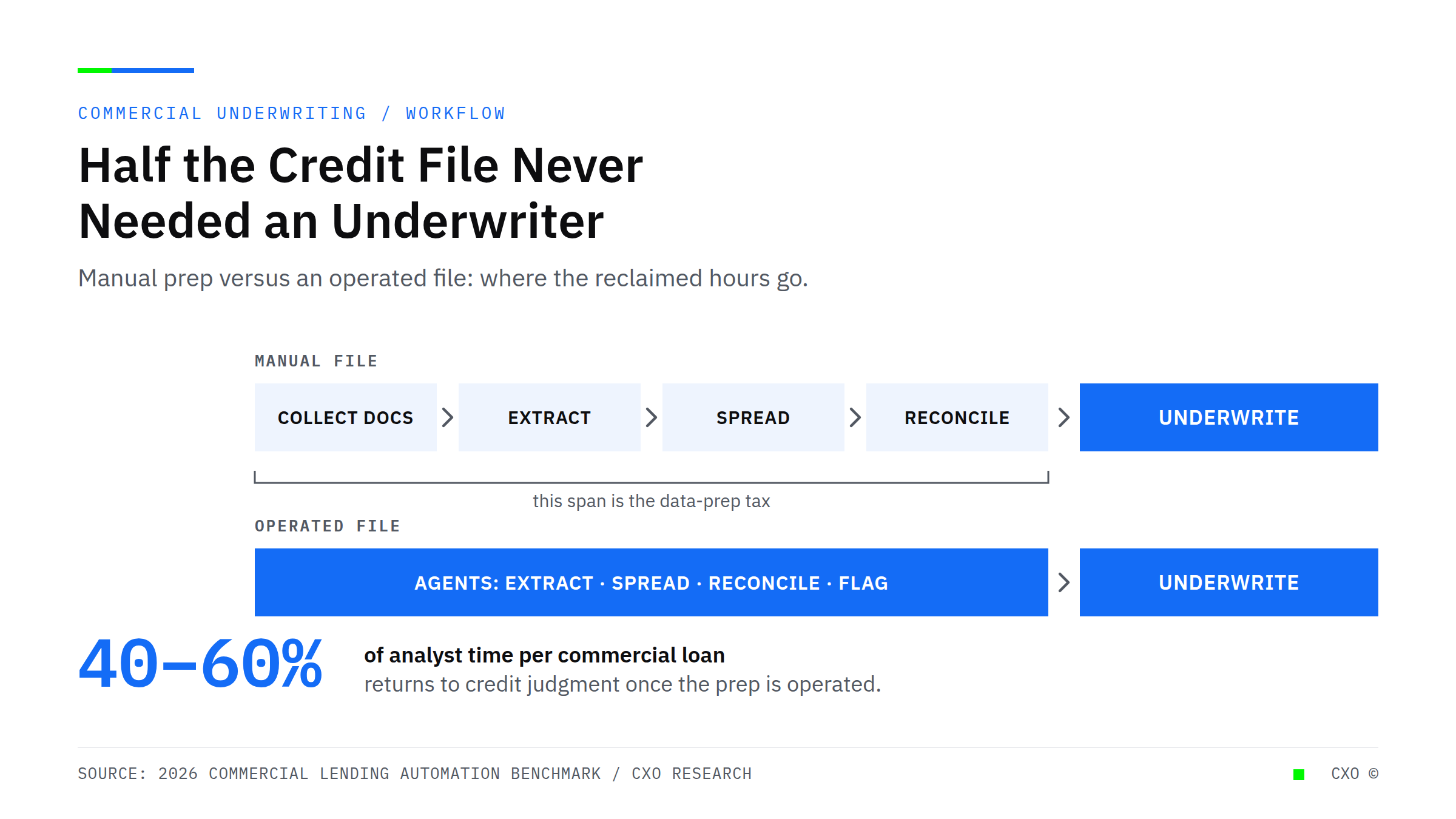
Anatomy of a commercial credit file comparing a manual file, which spends 40 to 60 percent of analyst time on document prep, with an operated file where agents handle extraction, spreading, and reconciliation before underwriting.

Your Best Underwriters Spend Half Their Day Not Underwriting

Automating financial spreading and reconciliation cuts analyst time per commercial loan by 40 to 60%. Why hiring another underwriter is the wrong fix for a backed-up pipeline, and what an operated credit file changes.
View Insight
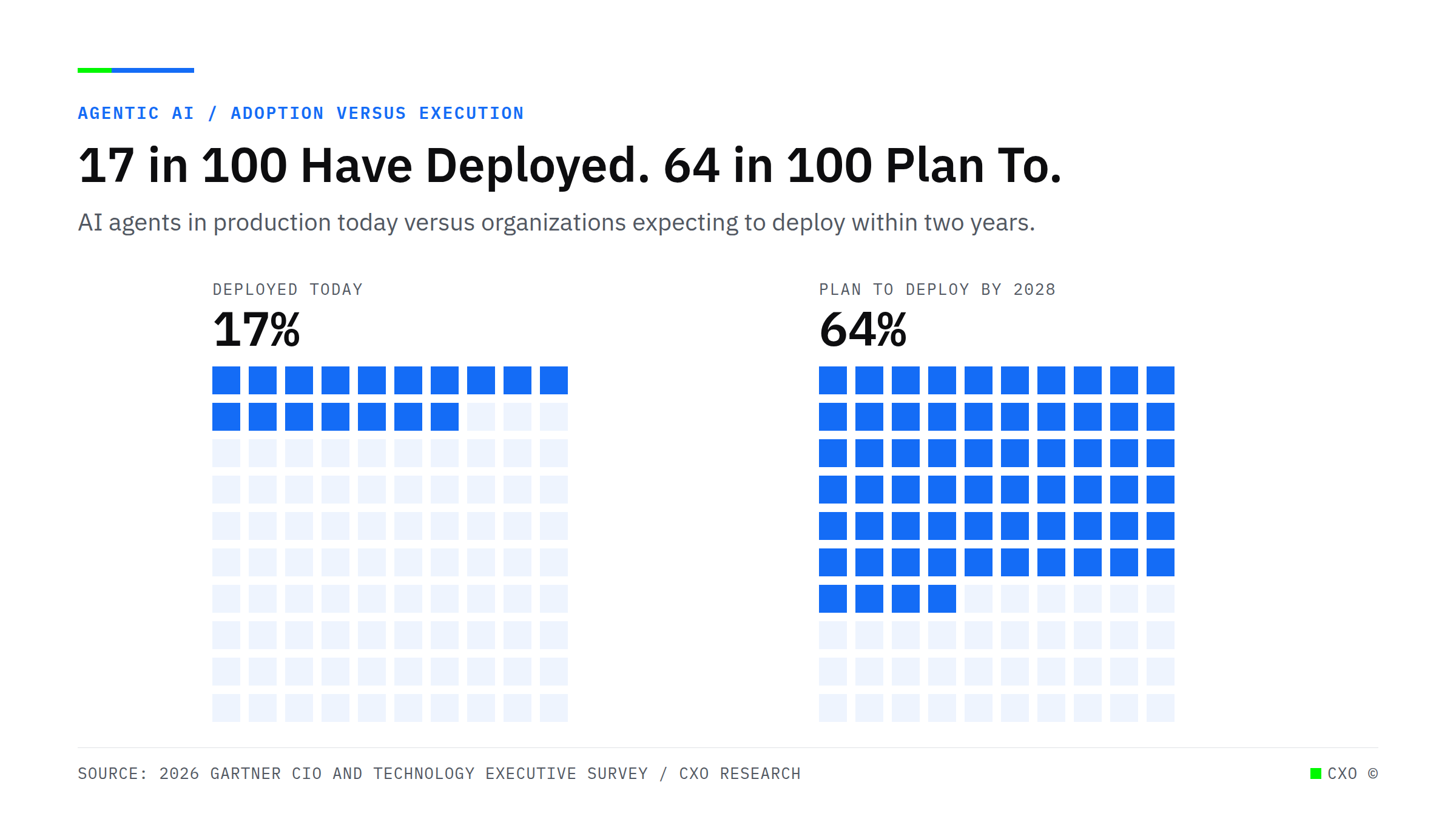
Dot grid chart comparing 17 percent of organizations with AI agents deployed today against 64 percent expecting to deploy within two years, from the 2026 Gartner CIO and Technology Executive Survey.

Agentic Projects Do Not Fail on Capability. They Fail on Scope.

More than 40% of agentic AI projects are forecast to be canceled by 2027, and escalating cost leads the causes. Why open scope, not capability, is what ends most agentic builds.
View Insight
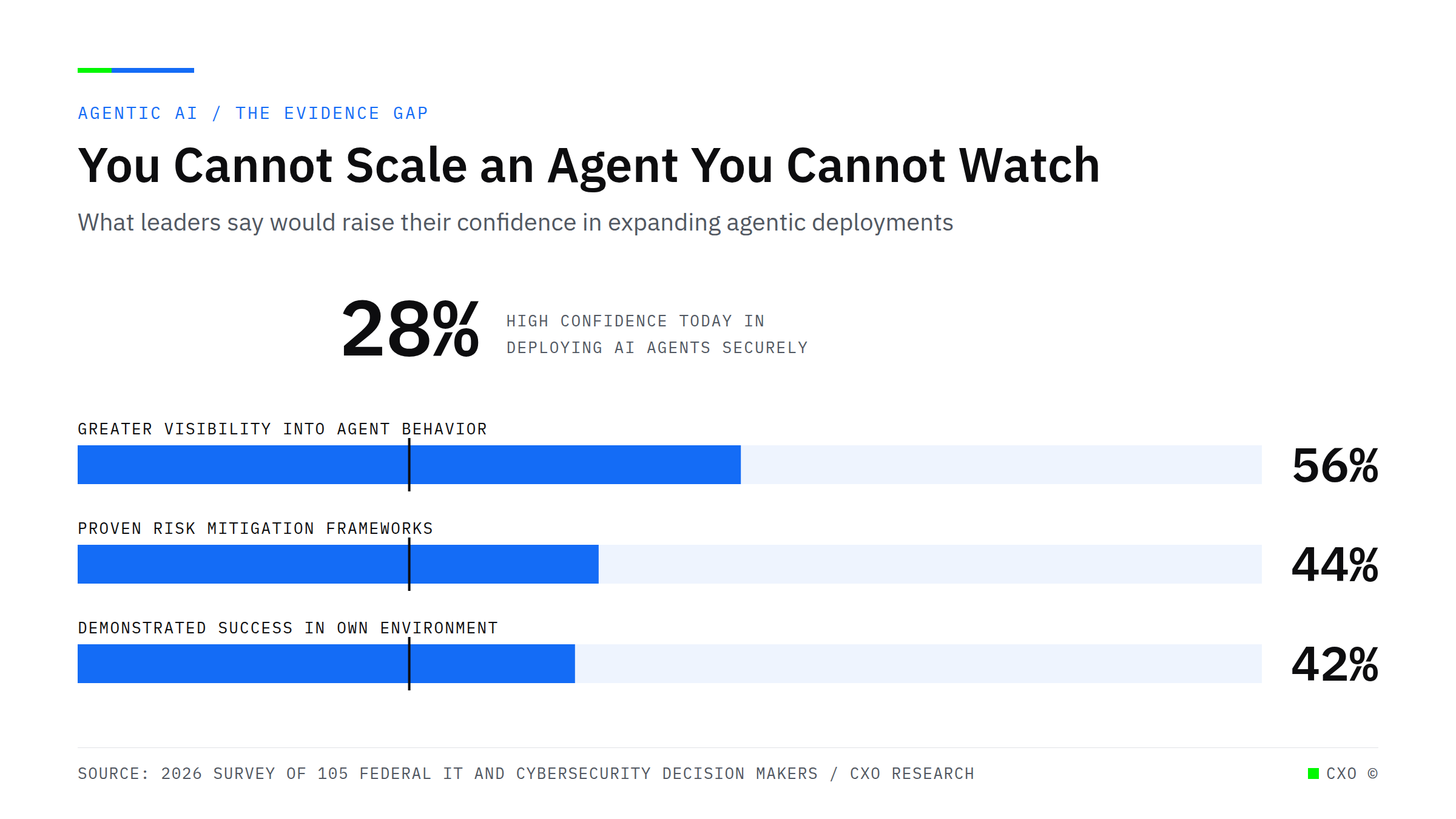
Bullet bar chart showing that 56 percent of leaders want greater visibility into AI agent behavior, 44 percent want proven risk frameworks and 42 percent want proof in their own environment, against only 28 percent who are highly confident deploying AI agents securely.

You Cannot Scale an Agent You Cannot Watch

Agentic AI pilots in lending stall at one workflow because no one can produce a record of what the agent did. Why observability, not model quality, is the constraint on scaling.
View Insight
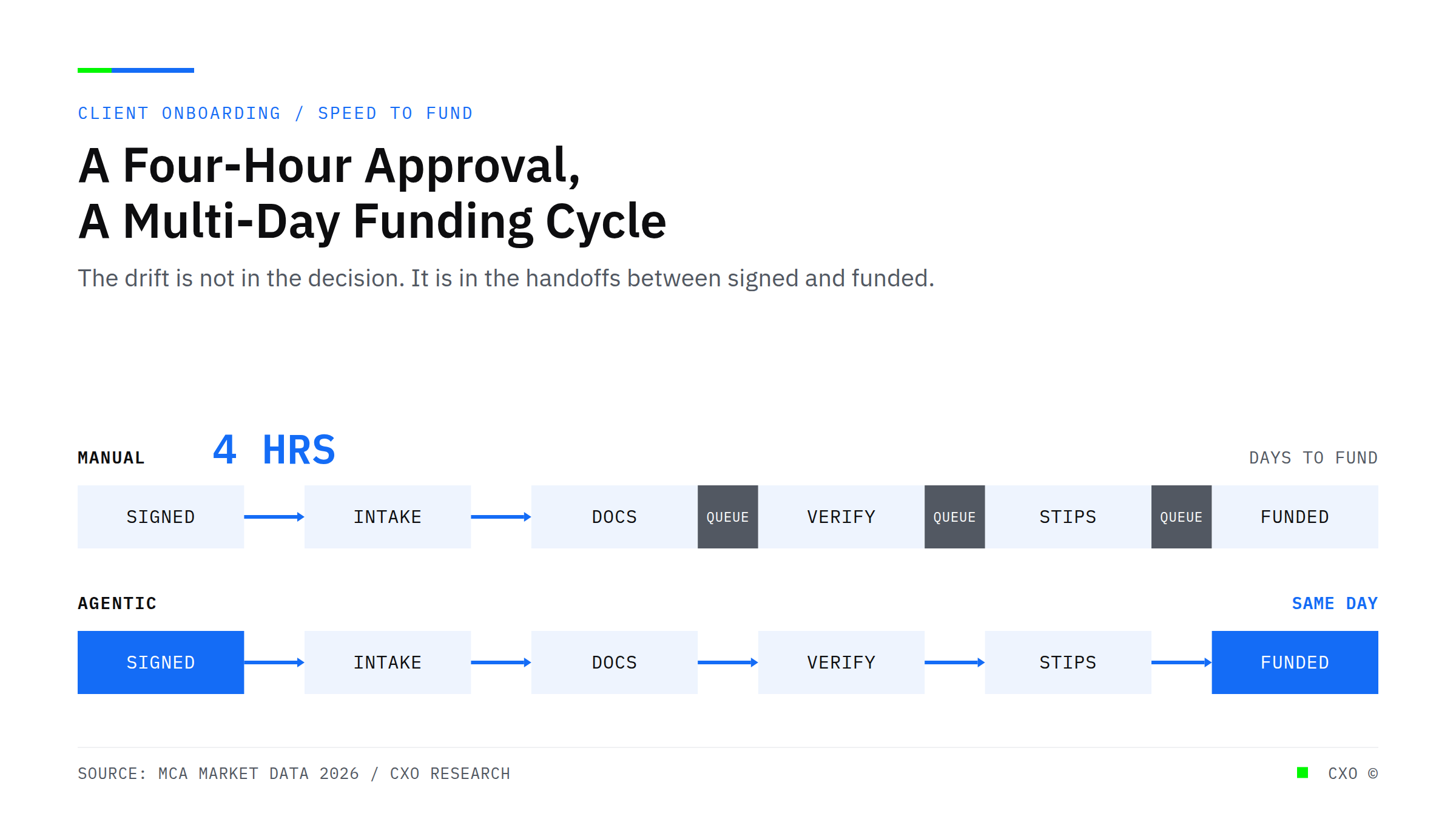
Two-track workflow diagram contrasting a four-hour advertised approval with a multi-day manual MCA funding cycle, marking the document, verification, and stipulation handoffs where days accumulate before funding.

The Funder Who Advertises Four-Hour Approvals Takes Nine Days to Actually Fund

Alternative lenders advertise four-hour funding but operate multi-day cycles. See where the days hide between signed application and wire, and how agentic onboarding closes the gap.
View Insight
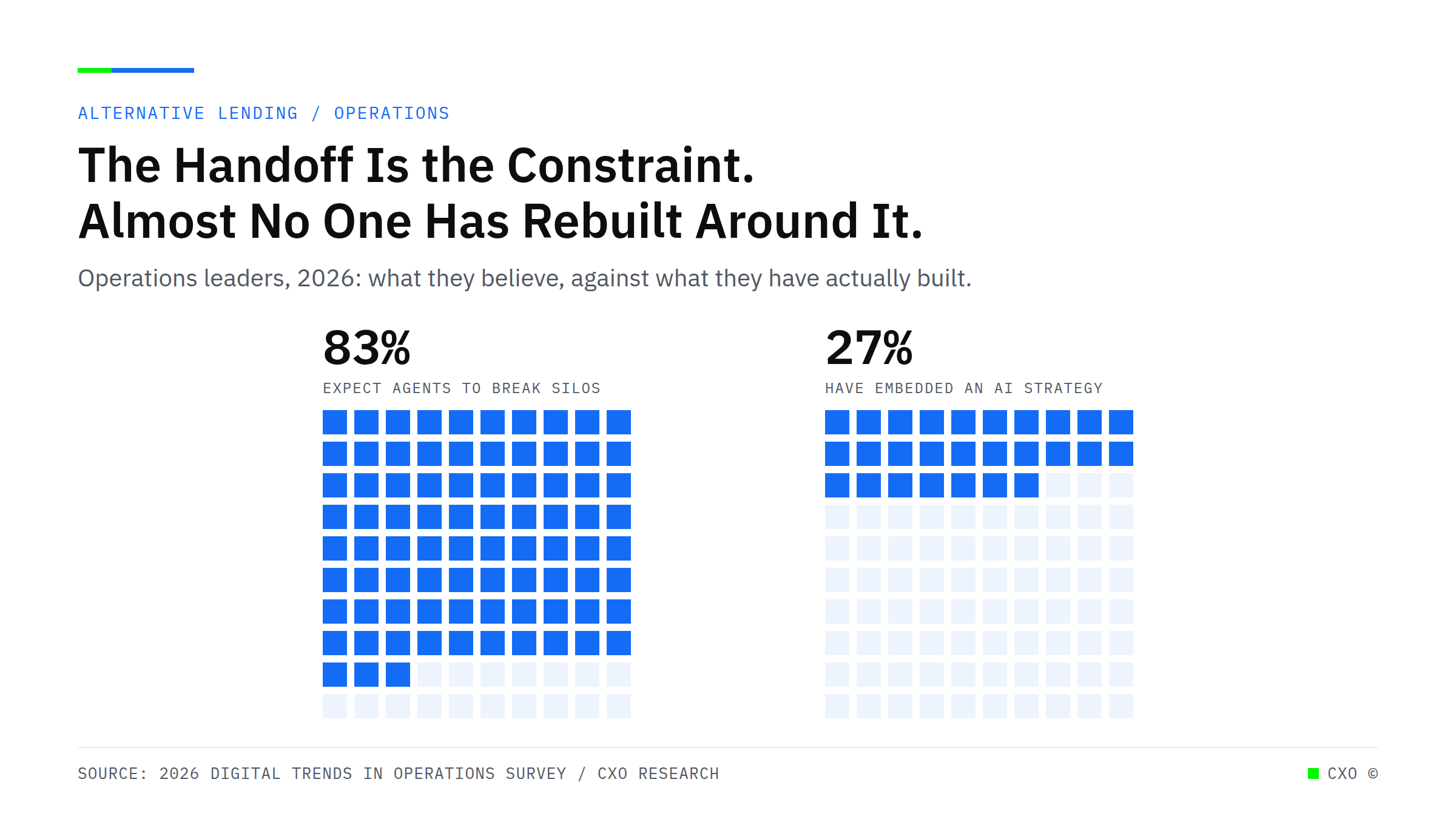
Two dot grids comparing operations leaders in 2026: 83 of 100 expect AI agents to break down functional silos, while 27 of 100 have fully embedded an AI strategy.

No Department Owns Your Biggest Cost Leak

83% of operations leaders say AI agents will break functional silos. Only 27% have embedded a strategy. In lending, the cost leak lives in the handoffs no department owns, and no cost review will find it.
View Insight
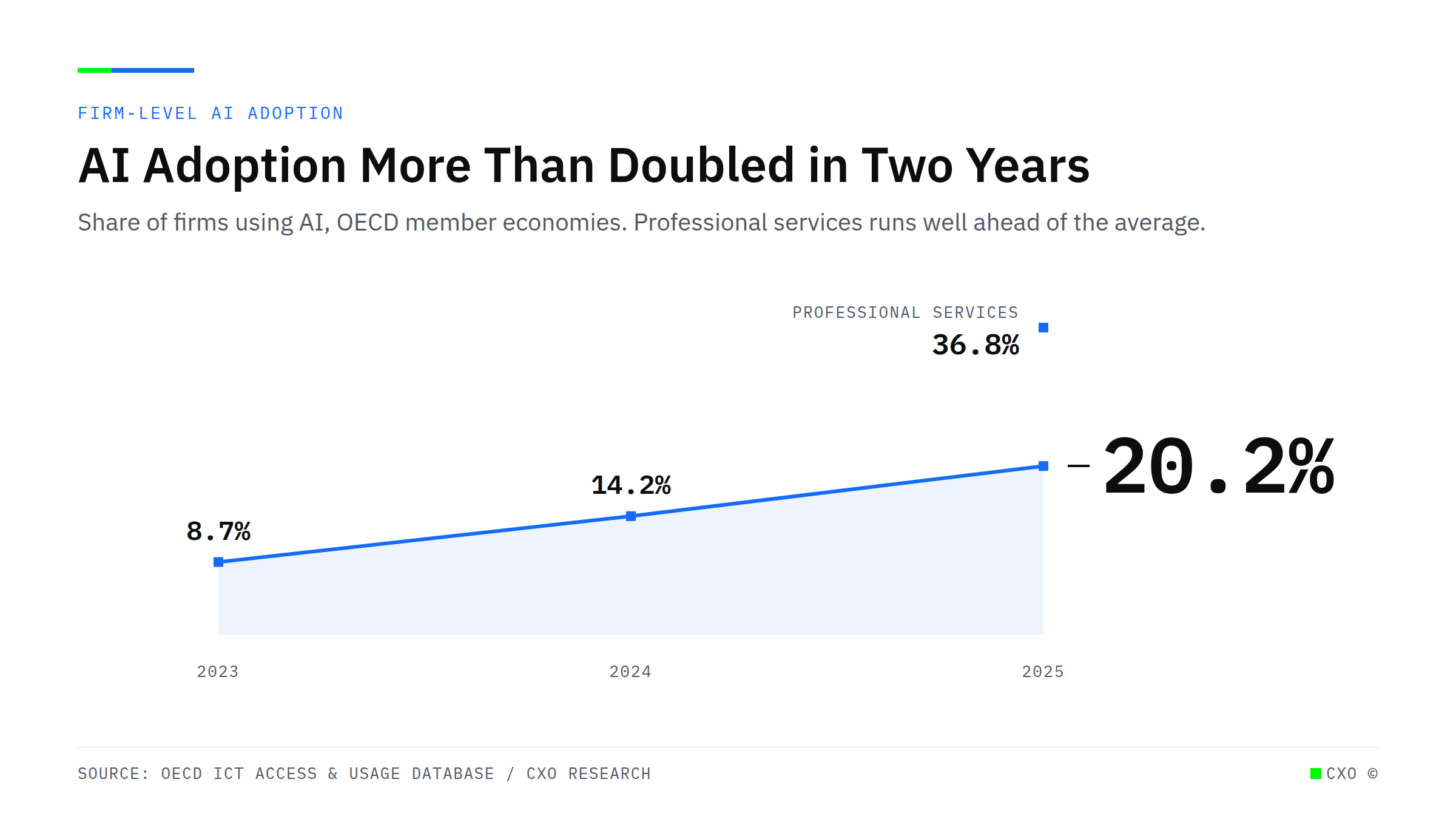
Line chart showing firm-level AI adoption across OECD member economies rising from 8.7% in 2023 to 14.2% in 2024 to 20.2% in 2025, with professional services at 36.8% in 2025.

The Second Price of AI Is Your Firm's Process

Firms protect client data with sophisticated rigor and classify their own process knowledge not at all. Adoption is compounding at 20.2% of firms, 36.8% in professional services. The method gets encoded either way.
View Insight

Start with the process that costs you most.

A conversation first. A structured assessment when it earns one. Or see what a discovery finds before you book anything.

Book a discovery call See what a discovery finds