CXO Research

Insights

Selected writing from the practice.

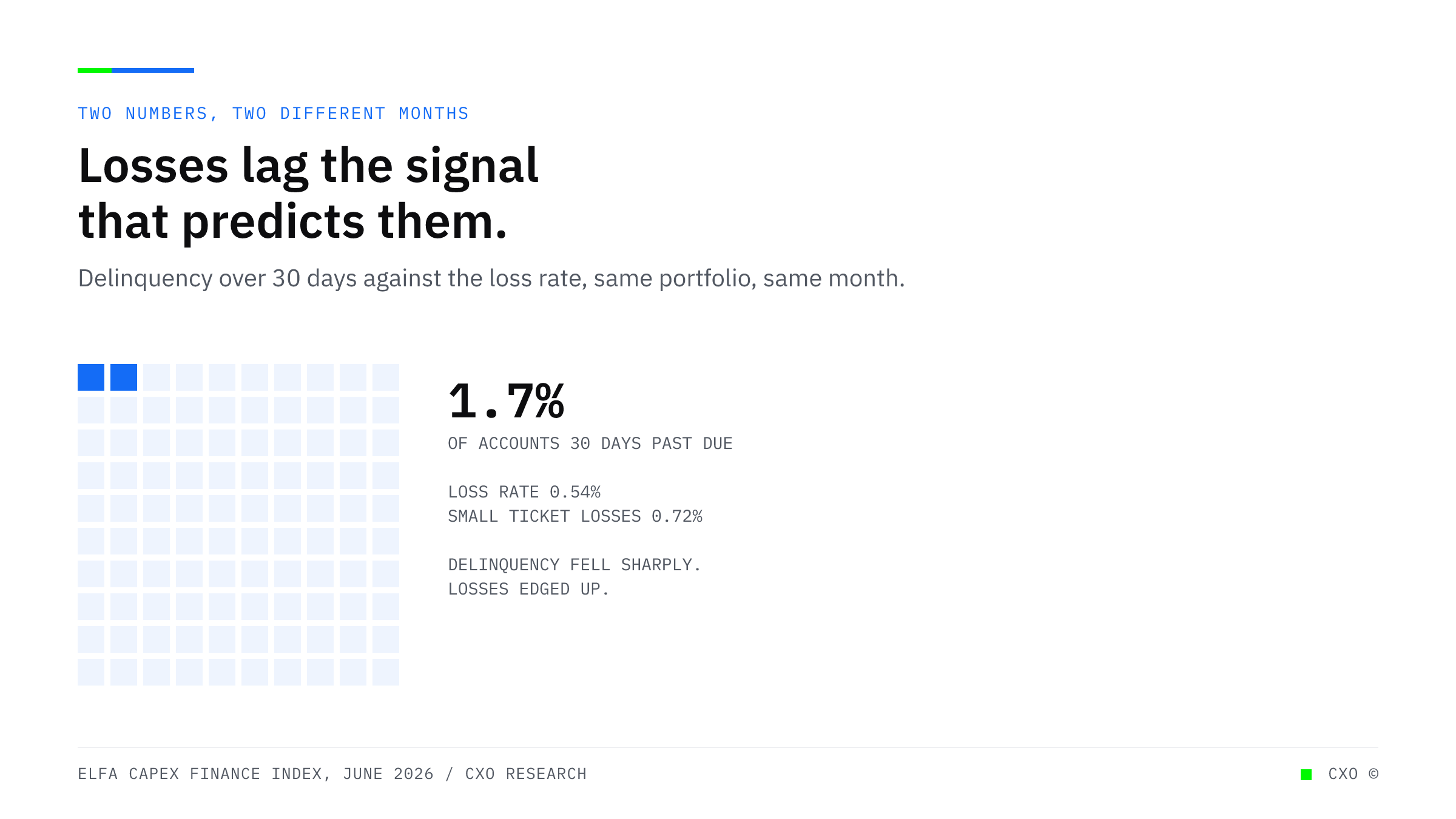
A waffle grid of 100 accounts with two marked, showing a 30-day-plus delinquency rate of 1.7 percent against a loss rate of 0.54 percent and small ticket losses of 0.72 percent.

Delinquencies Fell Sharply and Losses Edged Up in the Same Month. Both Are True.

Equipment finance delinquencies over 30 days sat at 1.7 percent in June while the loss rate rose to 0.54 percent. Losses lag the delinquency that produces them, which makes monitoring cadence a credit control rather than a reporting task.
View Insight
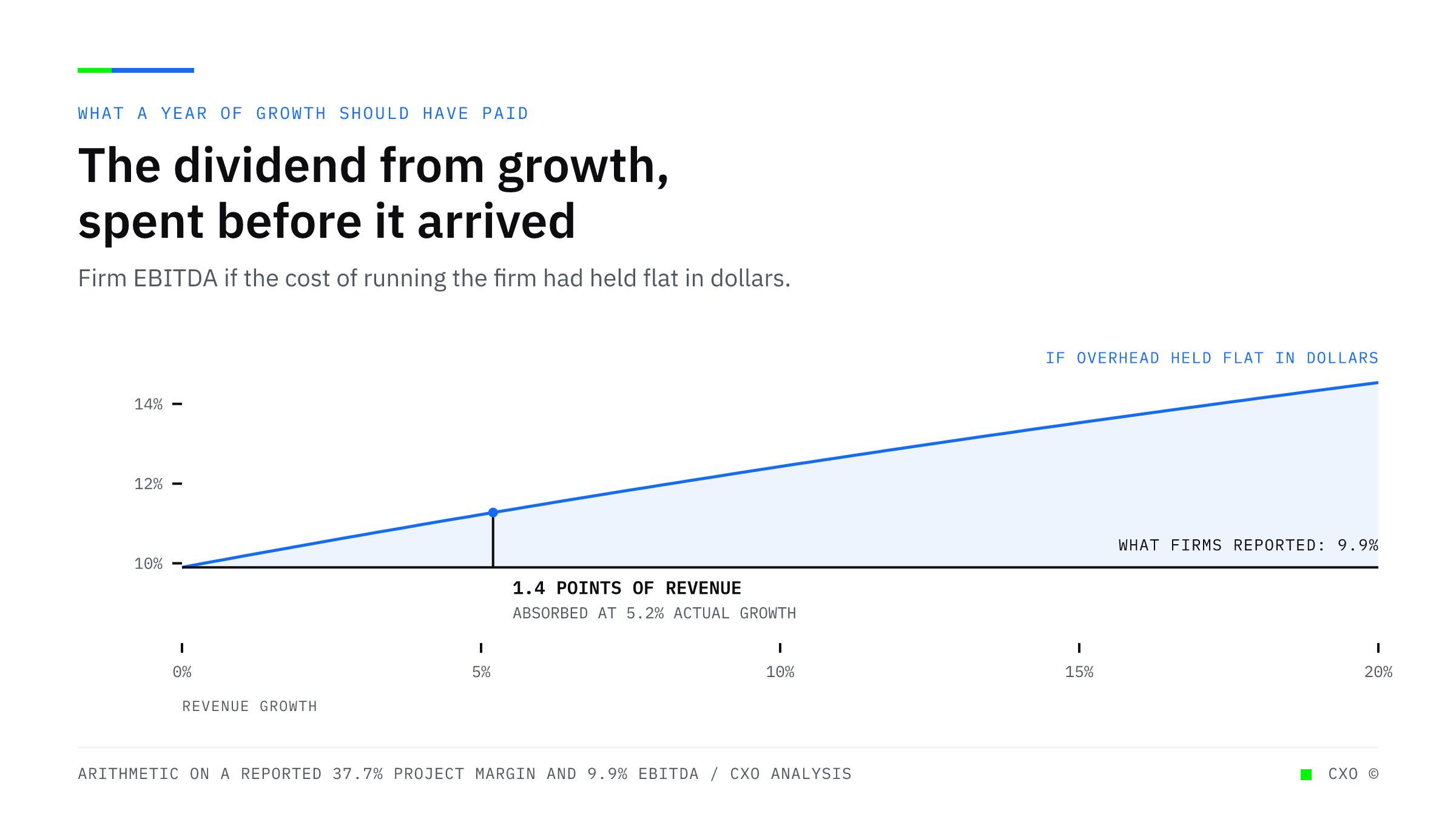
A curve showing the firm profitability that 5.2 percent revenue growth would have produced if the cost of running the firm had held flat, against the flat line of what firms actually reported.

Project Margin Hit a Five-Year High. The Cost of Running the Firm Grew Twice as Fast as Revenue.

Delivery improved by nearly two points and firm profitability moved by one tenth of one point. Subtracting the two published margins shows where it went, and the number is larger than most partners would guess.
View Insight
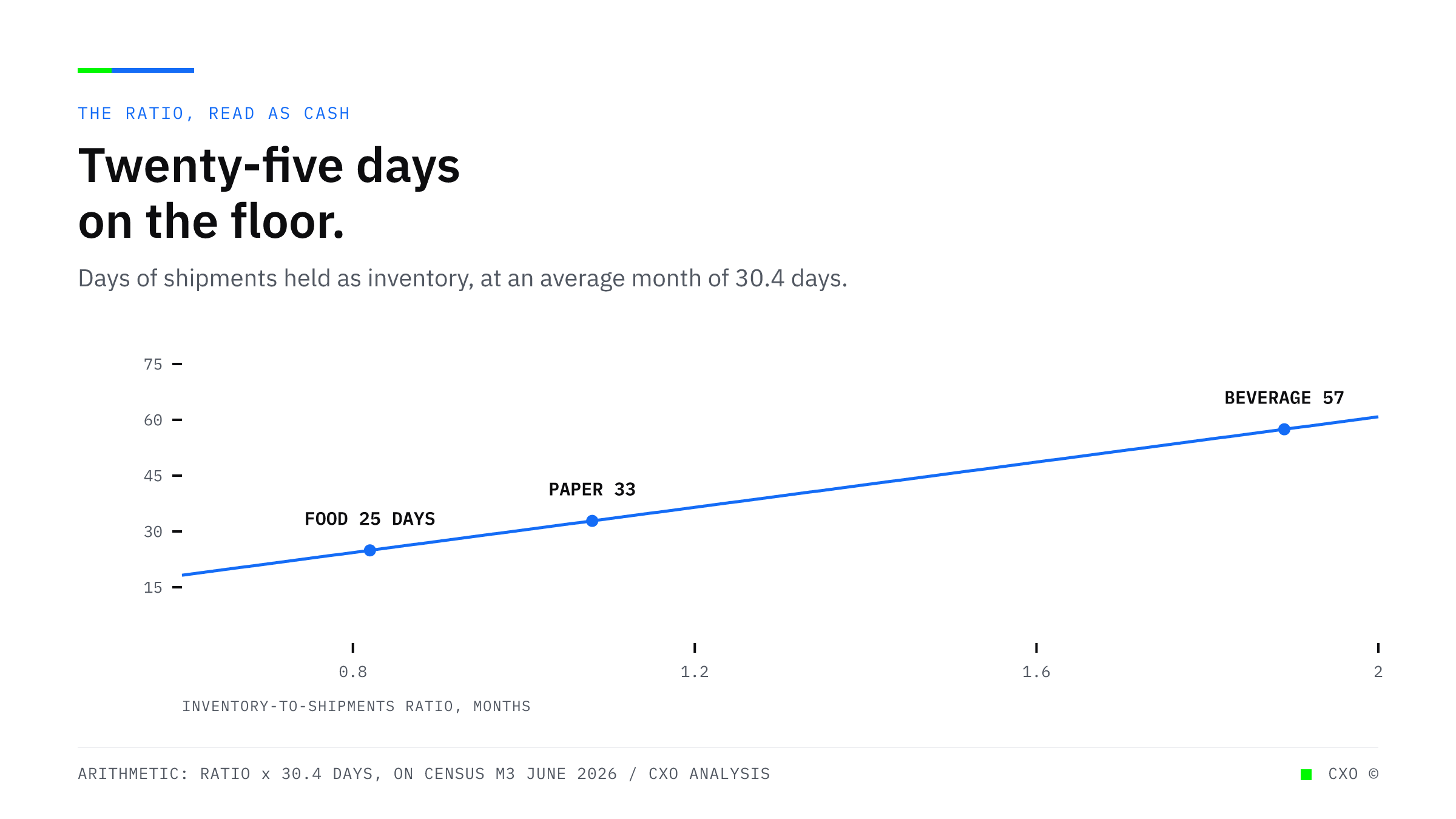
A curve showing days of shipments held as inventory rising with the inventory-to-shipments ratio, marked at food products with 0.82 and 25 days, paper products at 1.08 and 33 days, and beverage and tobacco at 1.89 and 57 days.

Food Manufacturers Carry 25 Days of Shipments as Inventory. Beverage Carries 57.

Inventory-to-shipments ratios of 0.82 for food and 1.89 for beverage and tobacco translate into very different working capital positions. The ratio is a cash number that most operations only read as a volume number.
View Insight
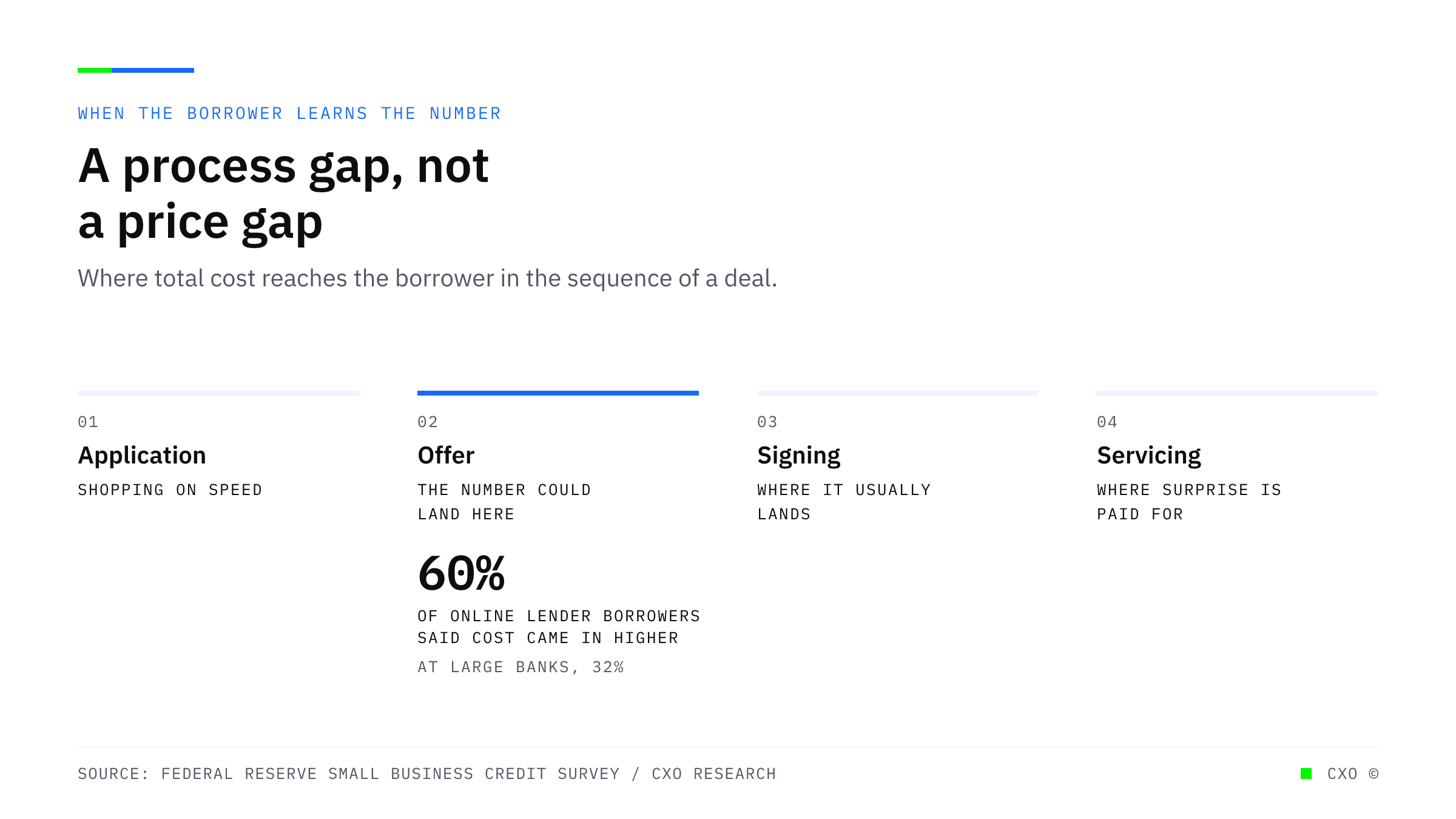
A labelled diagram of four stages in a borrower's path, marking the offer as the point where the total cost could be disclosed, against 60 percent of online lender borrowers reporting costs higher than expected and 32 percent at large banks.

Sixty Percent of Your Borrowers Were Surprised by the Cost. At Banks It Is Thirty-Two.

The same borrowers, the same market, a 28 point gap in whether the cost landed as expected. That difference is produced by process, which means it can be closed without touching price.
View Insight
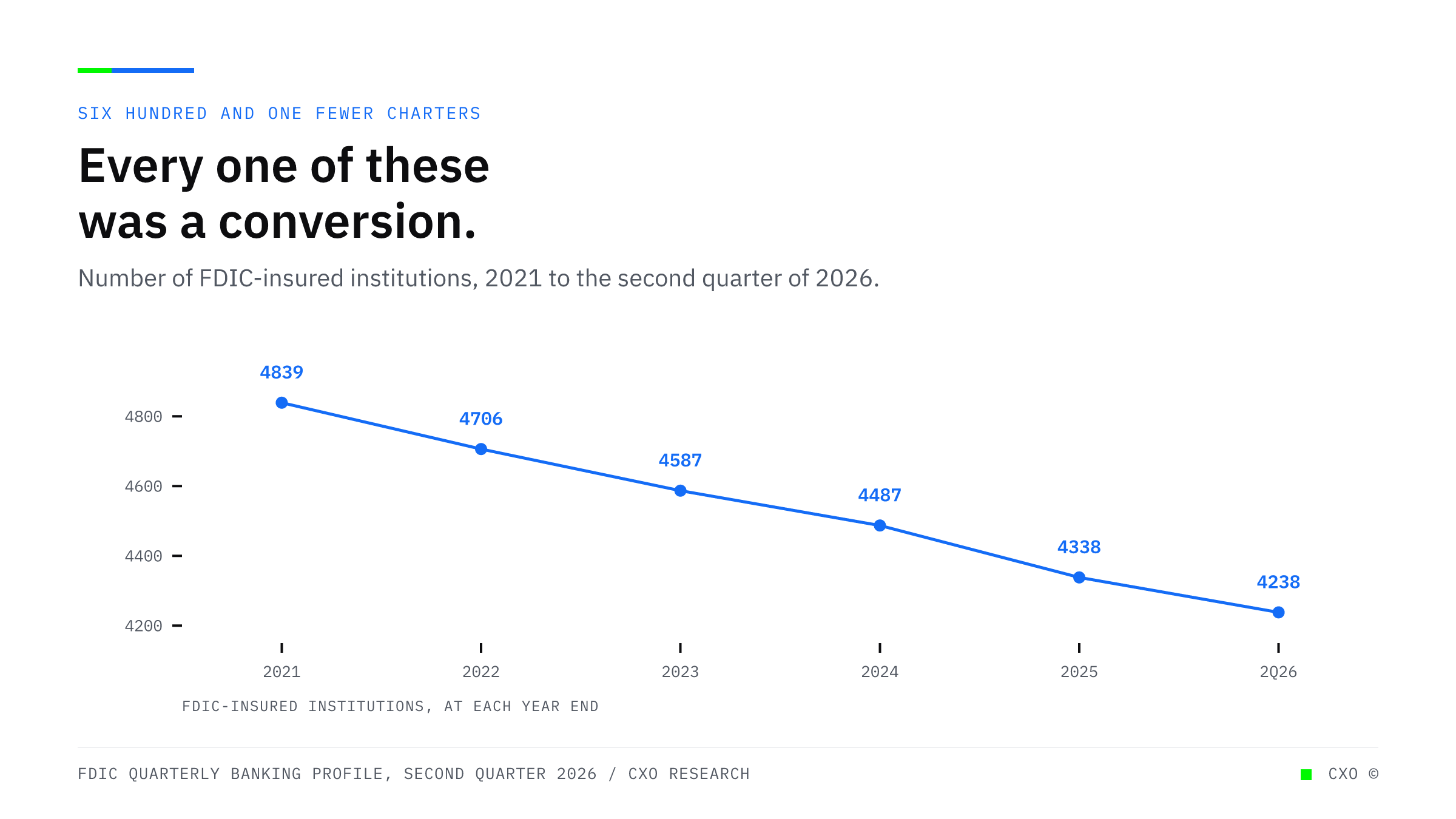
A stepped line falling from 4,839 insured institutions at the end of 2021 to 4,238 by the second quarter of 2026, a decline of 601 institutions.

Six Hundred Institutions Have Disappeared Since 2021. Every One Was an Integration Project.

The number of insured institutions fell from 4,839 at the end of 2021 to 4,238 by mid-2026, and 36 were absorbed by merger in a single quarter. Consolidation is a banking trend that arrives as a systems workload.
View Insight
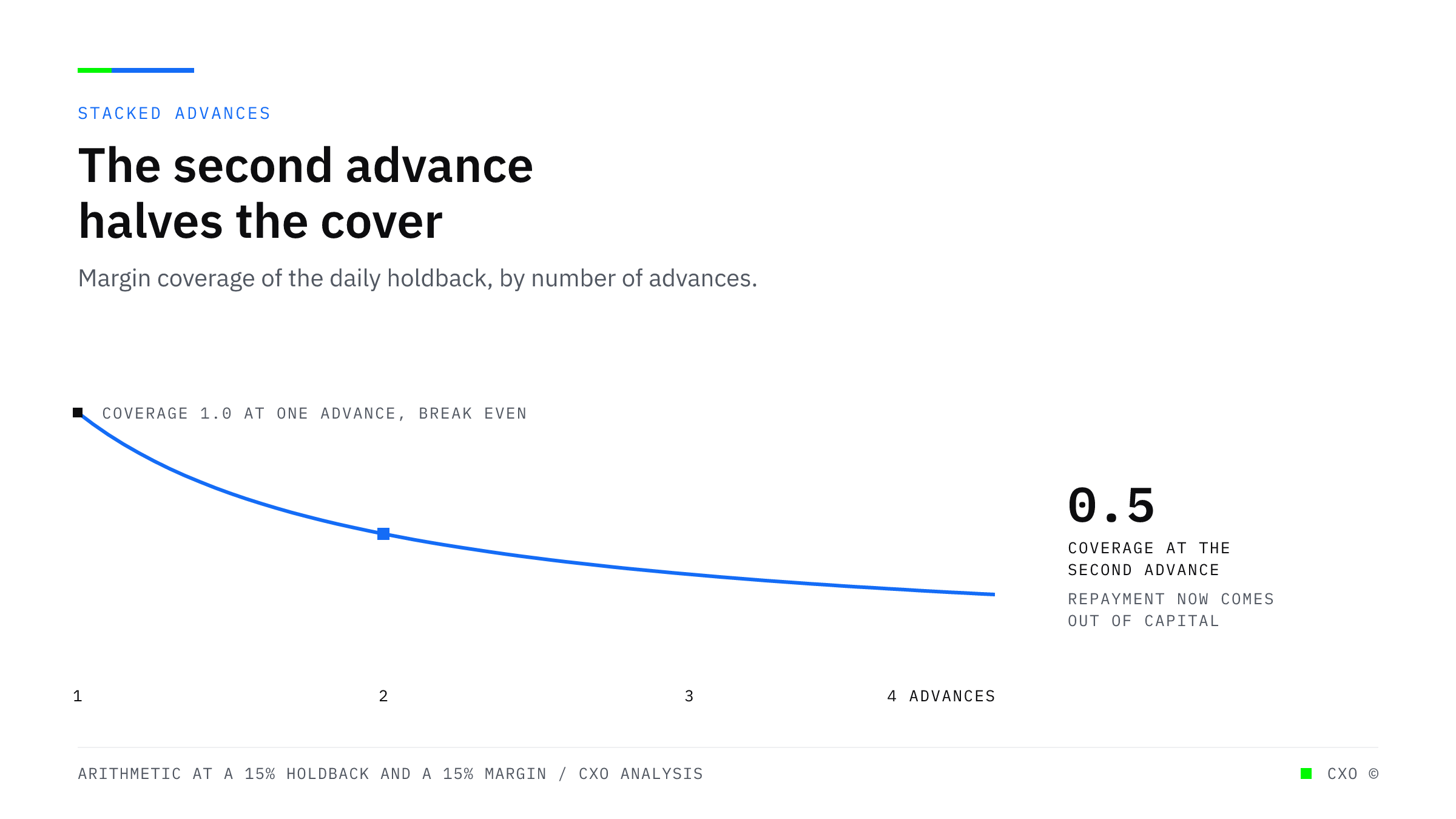
A falling curve showing how a merchant's margin coverage of their daily holdback collapses as advances stack, passing below the break-even threshold at the second advance.

Every Lender in a Stacked Position Underwrote It Correctly

One advance takes 10 to 20 percent of daily receipts. Two or more take 30 to 40. Each funder assessed the file in front of it, and the position that kills the merchant exists only across files.
View Insight
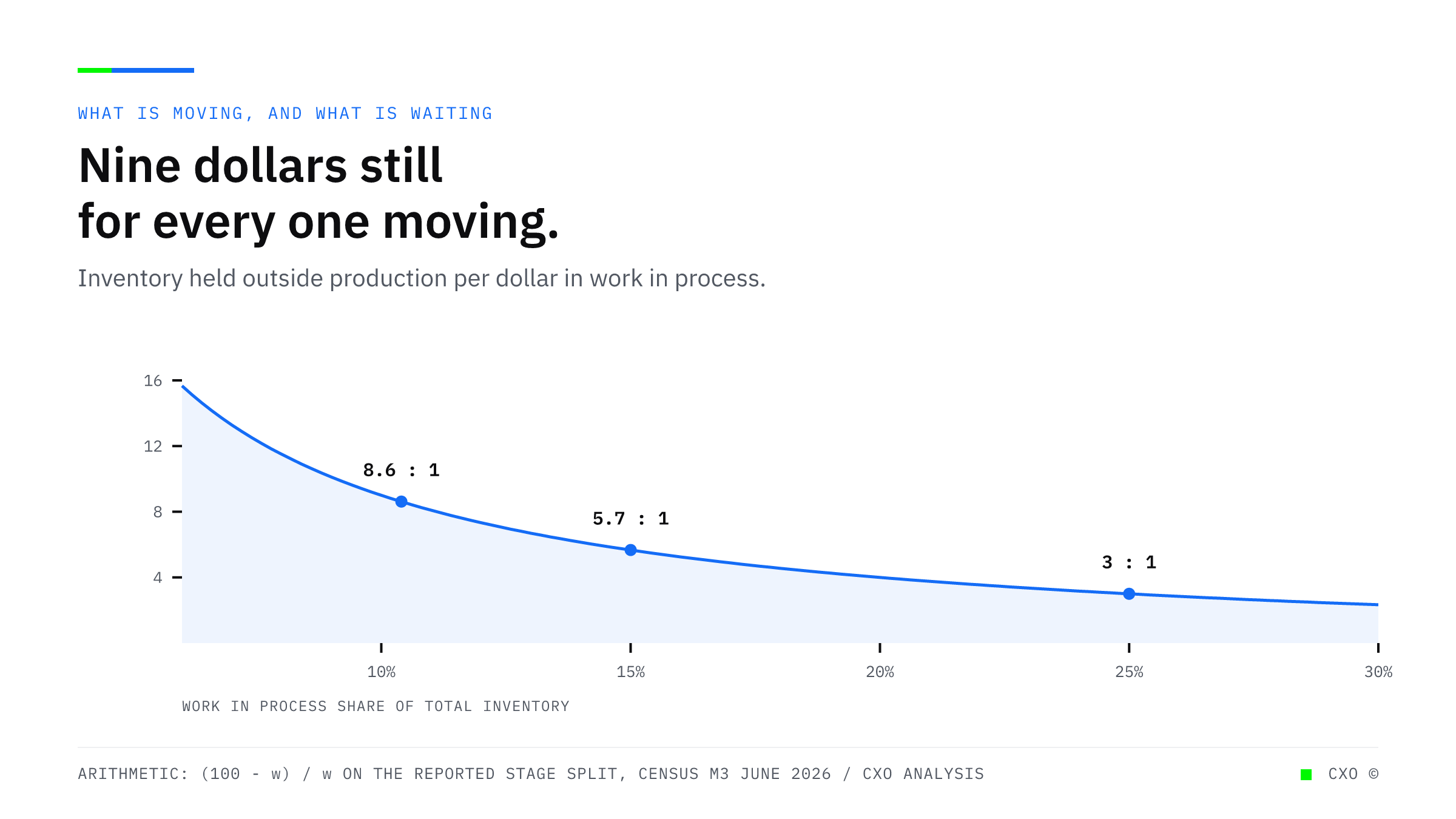
A curve showing dollars held outside production for every dollar in work in process, rising sharply as the work in process share falls, marked at the paper products figure of 10.4 percent where the ratio is 8.6 to one.

Paper Converters Hold Half Their Inventory in Raw Material and a Tenth in Production

Census data puts 51.7 percent of paper products inventory in materials and supplies against 10.4 percent in work in process. For made-to-spec production, that ratio is a statement about what happens before a job reaches the floor.
View Insight
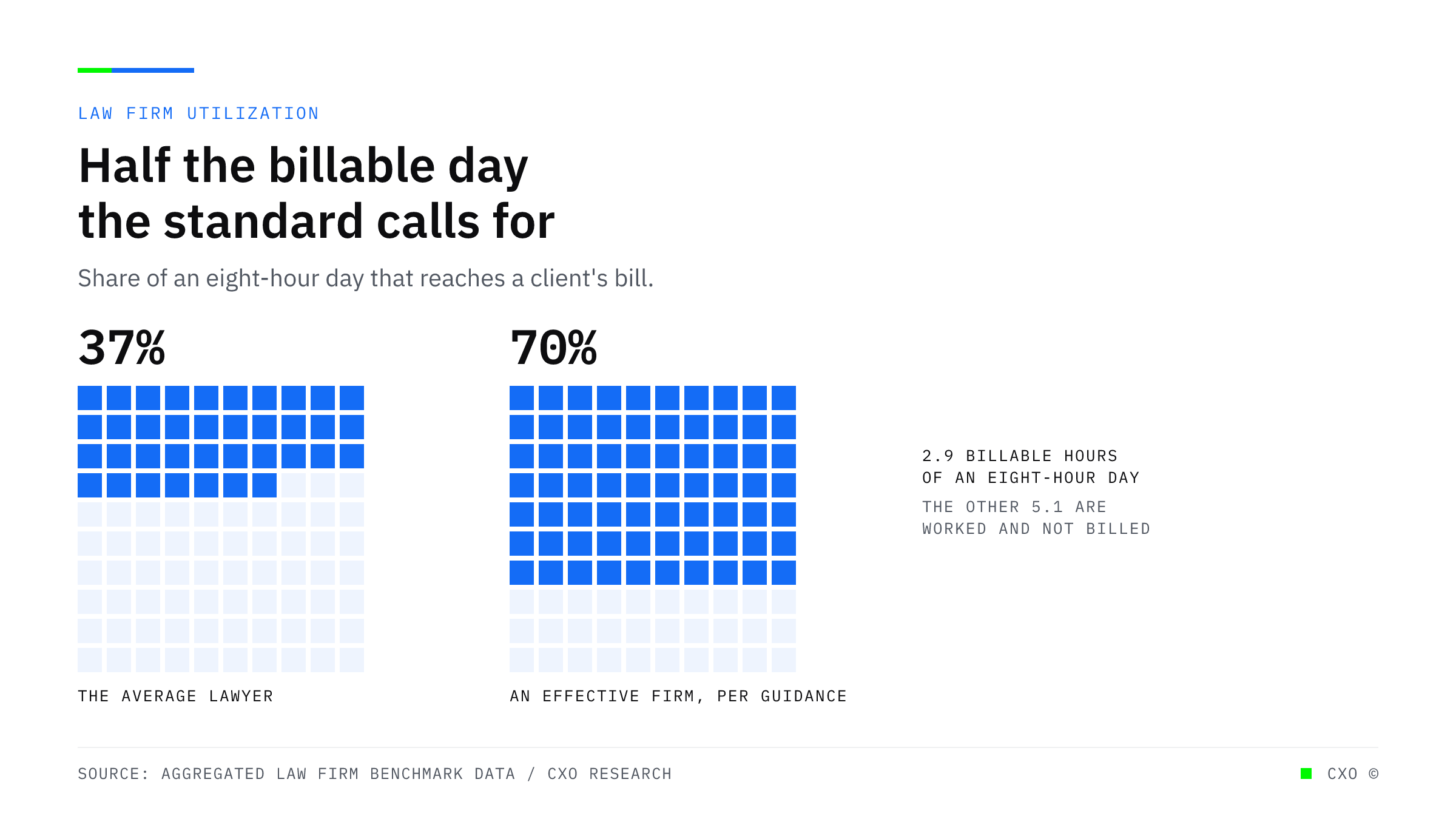
Two grids of 100 squares comparing the average lawyer's utilization rate of 37 percent against the 70 percent minimum the profession's own guidance sets for an effective firm.

The Average Lawyer Bills 2.9 Hours of an Eight-Hour Day

Utilization across law firms averages 37 percent against a 70 percent benchmark for an effective firm. It climbs with headcount, which tells you exactly what the constraint is.
View Insight

Start with the process that costs you most.

A conversation first. A structured assessment when it earns one. Or see what a discovery finds before you book anything.

Book a discovery call See what a discovery finds