CXO Research

Insights

Selected writing from the practice.

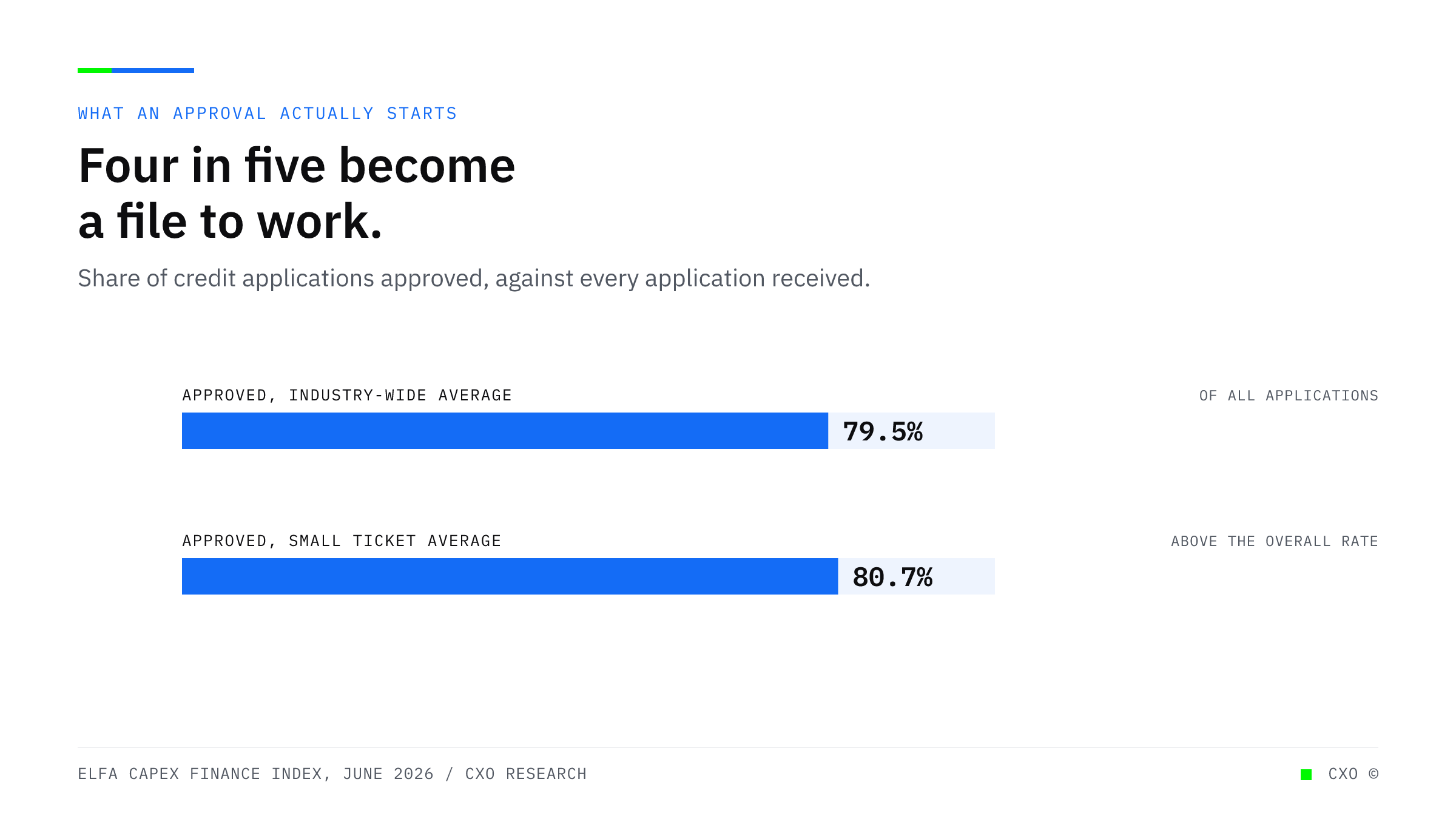
Bullet bars showing an overall credit approval rate of 79.5 percent and a small ticket approval rate of 80.7 percent, each against the full population of applications received.

Approval Rates Near 80 Percent Mean Four in Five Applications Become Work. Volume Is at a Record.

Equipment finance approval rates reached 79.5 percent in June, and 80.7 percent on small ticket. With 2026 volume forecast at the highest level since the survey began in 2006, the constraint is cost per file, not credit appetite.
View Insight
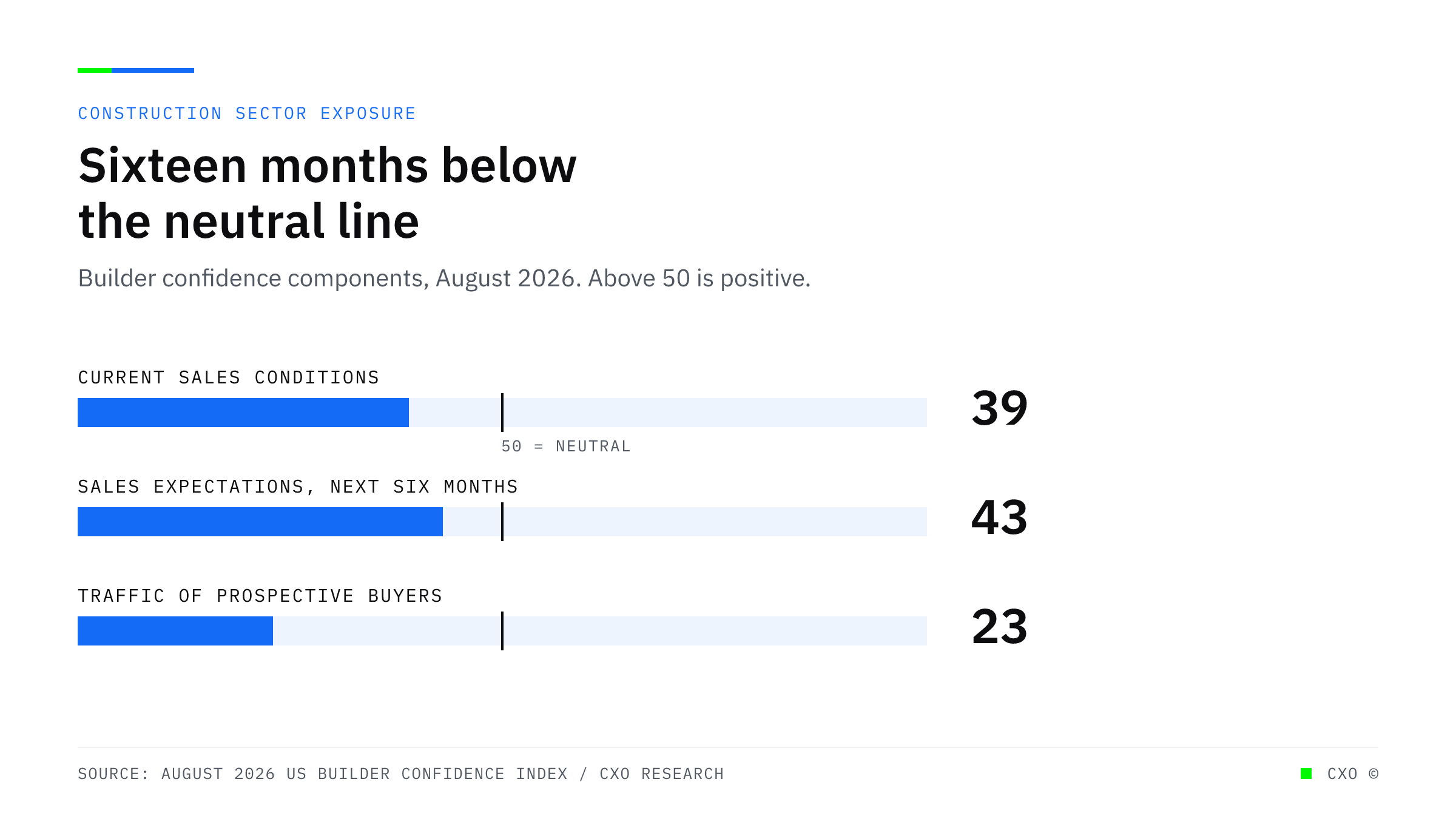
Three bullet bars showing builder confidence components against the neutral reading of 50: current sales conditions at 39, sales expectations at 43, and prospective buyer traffic at 23.

Housing Starts Fell 12.4 Percent. That Reaches a Lending Book Through Files That Look Unrelated.

July housing starts fell 12.4 percent on the month and 13.5 percent on the year, with builder confidence at 35 for a sixteenth straight month. Sector exposure arrives as many separate problems.
View Insight
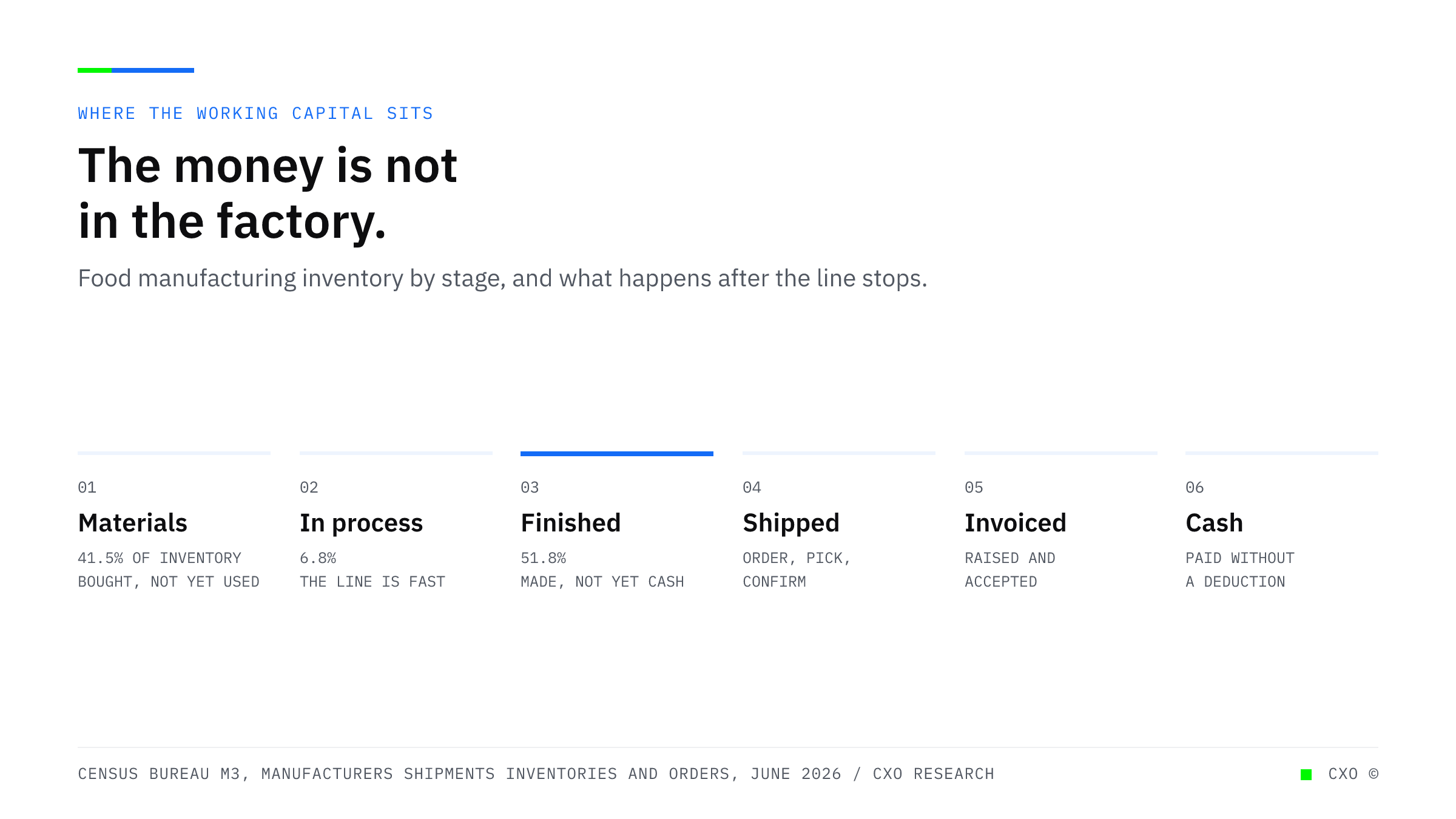
A labeled diagram of six stages from materials through cash, marking finished goods as the stage holding 51.8 percent of food manufacturing inventory against 6.8 percent in work in process.

Food Manufacturers Hold Half Their Inventory as Finished Goods. Only 7 Percent Is Actually Being Made.

Census data puts 51.8 percent of food manufacturing inventory in finished goods and 6.8 percent in work in process. The working capital is not tied up in production. It is tied up in everything that happens after production.
View Insight
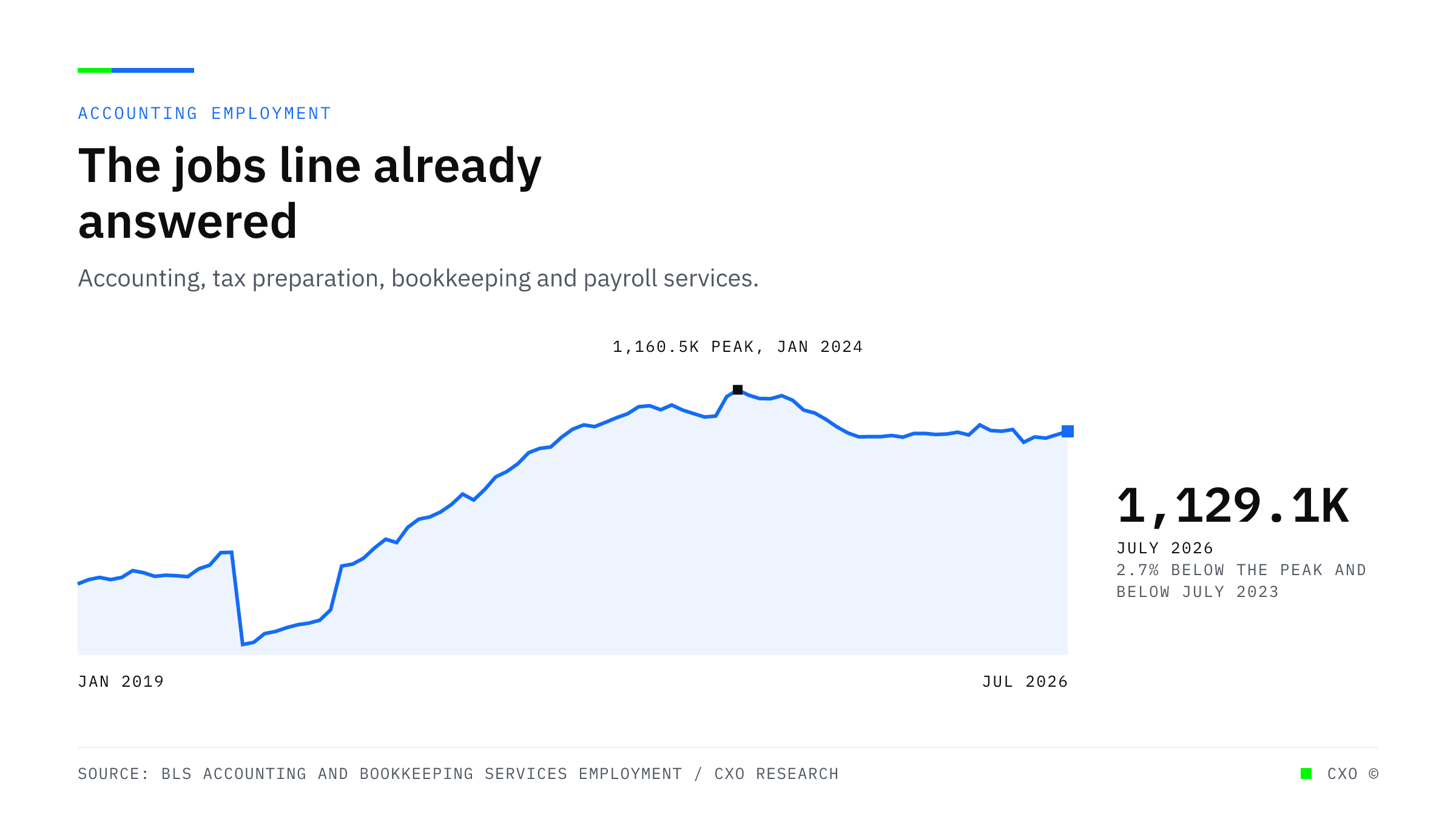
A line chart of monthly employment in accounting, tax preparation, bookkeeping and payroll services, peaking at 1,160,500 in January 2024 and standing at 1,129,100 in July 2026.

The Pipeline Is Refilling at the Front. Your Capacity Problem Is at the Back.

Accounting enrollment rose 8.9 percent to 205,180, a third straight increase. Graduates fell 6.6 percent and new CPA exam candidates dropped from 42,626 to 28,082 over the same stretch.
View Insight
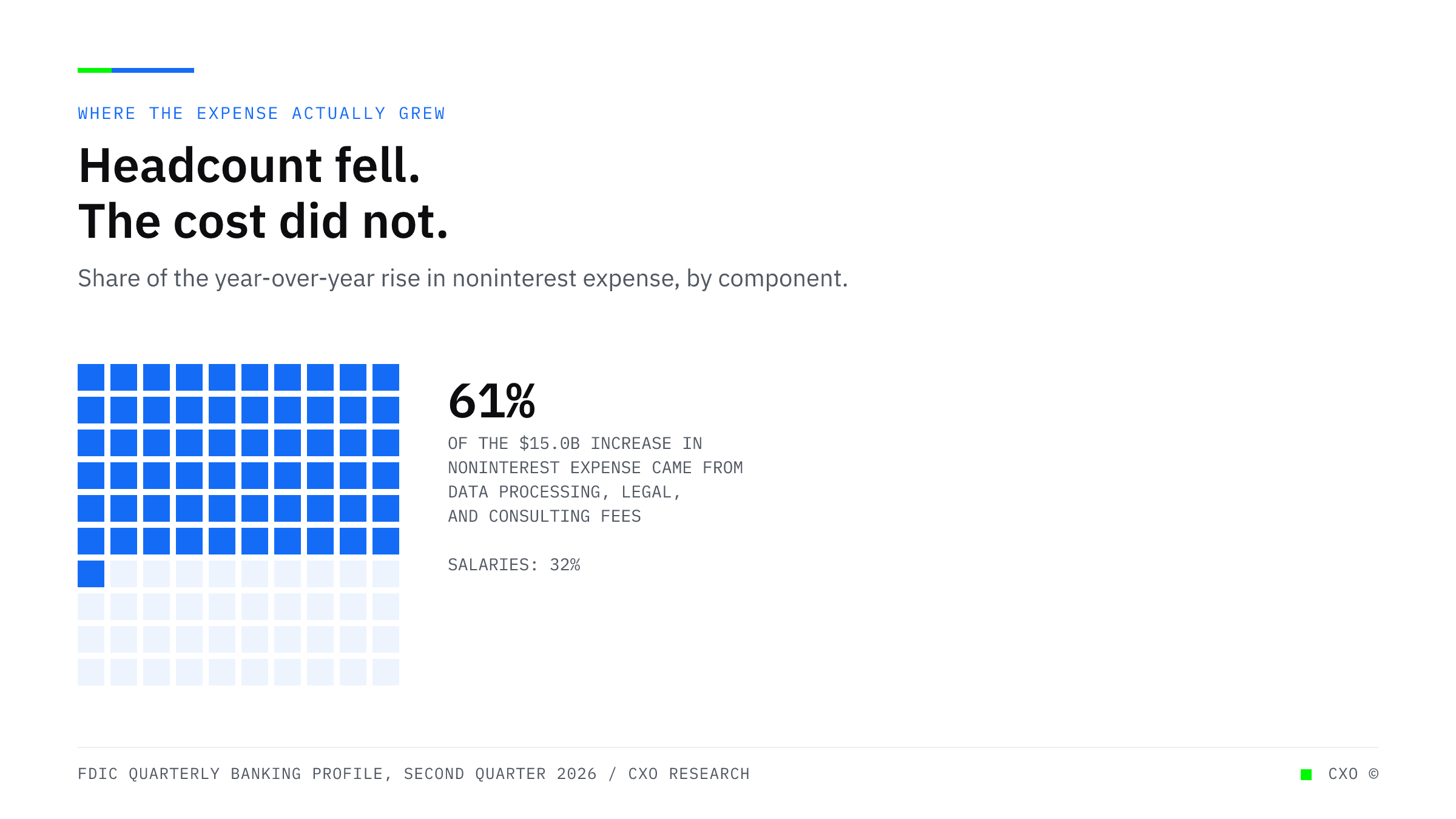
A waffle grid of 100 squares with 10 marked, showing that noninterest expense at insured institutions rose 10 percent year over year while full-time equivalent headcount fell 1.3 percent.

Banks Cut Headcount and Noninterest Expense Rose 10 Percent. The Cost Base Is Not People.

Insured institutions shed 27,662 full-time equivalents over a year while noninterest expense grew 10 percent. When cost rises as headcount falls, the expense is attached to the work rather than to the workforce.
View Insight
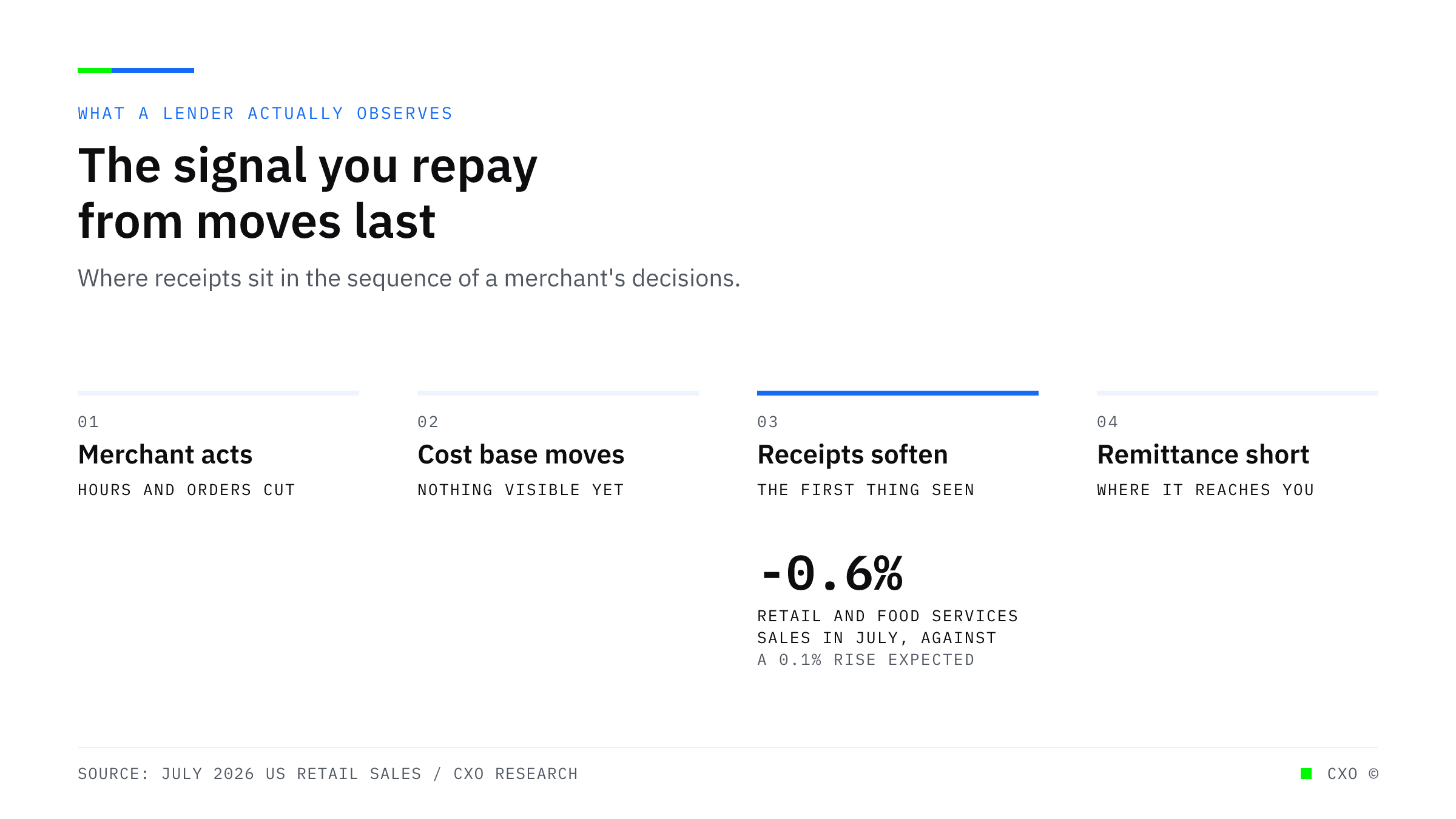
A labelled diagram of four stages showing that a merchant cuts hours and delays orders before anything changes in receipts, that July retail and food services sales fell 0.6 percent against an expected rise, and that remittance performance is where a lender finally sees it.

The Signal You Repay From Is the Last One to Move

July retail sales fell 0.6 percent against an expected rise, and categories ranged from minus 2.2 to plus 1.9 in the same month. Receipts are both the slowest signal a lender has and the least specific.
View Insight
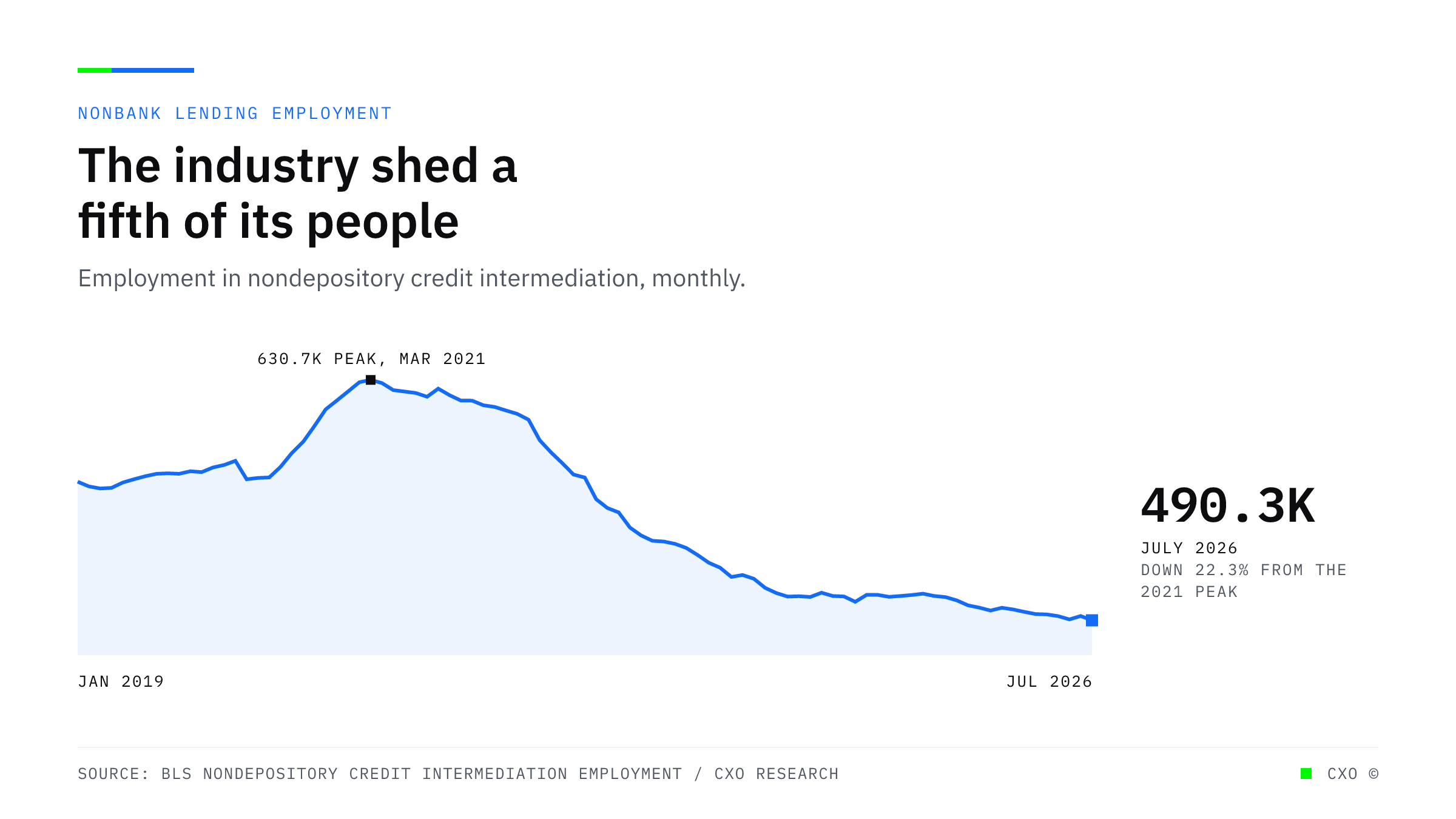
A curve of monthly employment in nondepository credit intermediation, peaking at 630,700 in March 2021 and falling steadily to 490,300 in July 2026, a decline of 22.3 percent.

The Industry Has 140,000 Fewer People Than in 2021 and a Larger Share of the Applications

Employment in nondepository credit intermediation has fallen 22.3 percent from its 2021 peak and is still declining, while the share of small business applicants going to online lenders rose to 29 percent.
View Insight
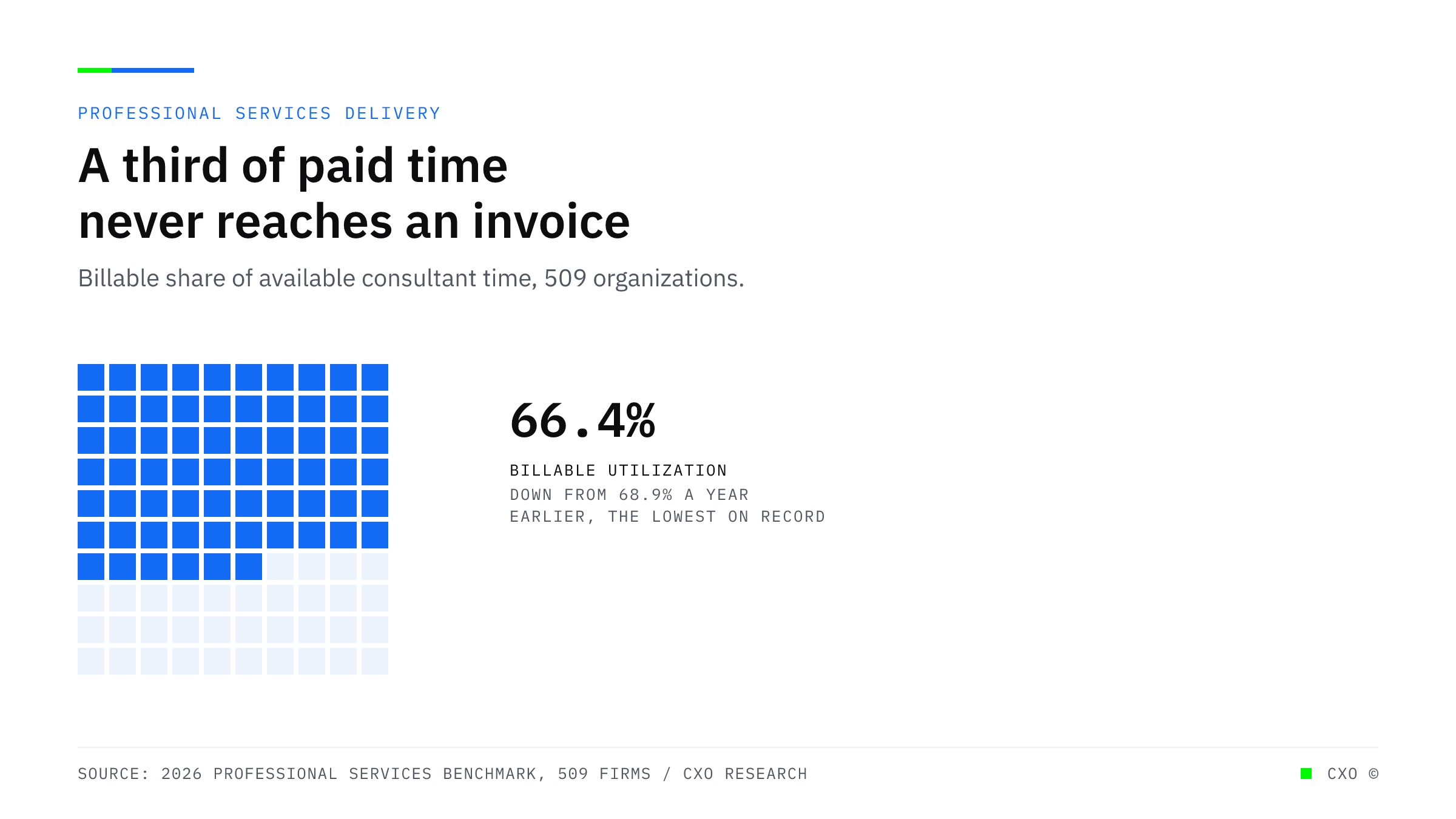
A grid of 100 squares with 66 filled in blue, showing that 66.4 percent of available consultant time is billable across 509 professional services organizations, the lowest level recorded.

Billable Utilization Hit a Record Low in the Same Year AI Use Rose Forty Percent

Across 509 professional services organizations, billable utilization fell to 66.4 percent, the lowest on record, while revenue growth improved and generative AI reached 27.1 percent of projects.
View Insight

Start with the process that costs you most.

A conversation first. A structured assessment when it earns one. Or see what a discovery finds before you book anything.

Book a discovery call See what a discovery finds